







What's Happening?
Hampton University, a Carnegie Research 2 institution, is developing a comprehensive artificial intelligence (AI) ecosystem that integrates education, workforce development, research, entrepreneurship, and community engagement. This initiative aims to prepare
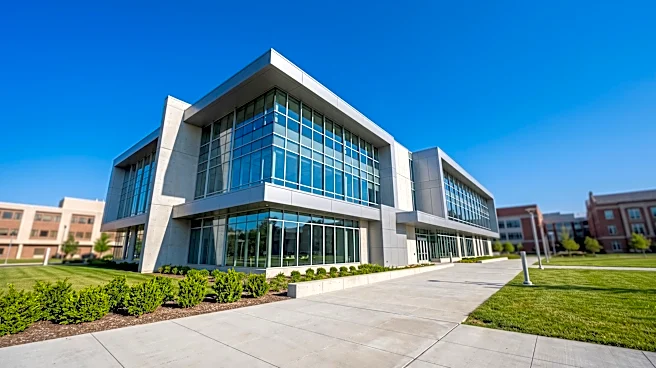
students, researchers, and communities to critically engage with AI, improve its applications, and influence its future direction. The university recently opened its Digital Artificial Intelligence Immersive Experience (D-AIX) facility and plans for a second AI-focused space, the Hampton Artificial Intelligence and Technology Center (HTAC), with a third, the AI and Advanced Technologies Center of Excellence, also in the works. These facilities are designed to provide hands-on exposure to AI and emerging technologies, fostering workforce readiness and innovation. Hampton Professor Dr. Isi Ero-Johnson has contributed to Virginia's statewide examination of AI through an appointment to an AI task force by Virginia Governor Glenn Youngkin, highlighting the university's role in broader AI discussions.
Why It's Important?
This initiative by Hampton University is significant as Virginia is a major hub for data centers, making it a critical backbone of the internet and the emerging AI economy. The university's focus on ethical AI development, particularly for communities of color, addresses concerns about bias, privacy, representation, and accountability in AI systems. By preparing students not only to use AI but also to understand its societal implications, Hampton University is working to ensure that historically underrepresented communities are not just consumers but also architects of AI's future. This approach aims to bridge potential divides in economic opportunity and civic participation that could arise from rapid technological advancements, ensuring that the benefits of AI are broadly shared and that its development is guided by diverse perspectives.
What's Next?
Hampton University plans to continue expanding its AI ecosystem with the development of the Hampton Artificial Intelligence and Technology Center (HTAC) and the AI and Advanced Technologies Center of Excellence. These centers will further embed emerging technology into academic and student experiences and serve as regional and state hubs for digital learning. The university will also continue to integrate AI modules into core computer science courses and offer non-degree pathways for individuals seeking foundational AI skills through its Workforce Development Enterprise. The ongoing involvement of Hampton faculty, such as Dr. Isi Ero-Johnson, in state-level AI task forces indicates a continued effort to influence policy and ethical considerations in AI development at a broader scale.
Beyond the Headlines
The deeper implications of Hampton University's AI ecosystem extend to addressing historical inequities in technological access and opportunity. As a Historically Black College and University (HBCU), Hampton's initiative brings a distinct intellectual tradition to the national conversation on AI, emphasizing ethical literacy alongside technical proficiency. This approach challenges the notion that technological advancement is solely about efficiency, instead prioritizing questions of 'what should AI do, for whom, and under whose authority?' The university's efforts aim to cultivate a generation of leaders who can critically assess how AI interacts with society, ensuring that the technology serves all communities and does not exacerbate existing social or economic divides. This focus on human infrastructure alongside physical infrastructure is crucial for a more inclusive and responsible AI future.