
What's Happening?
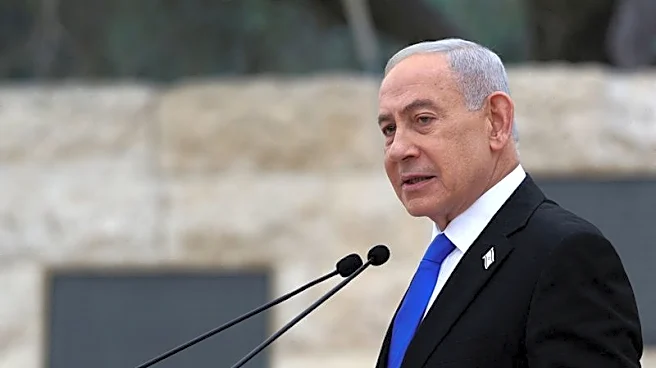
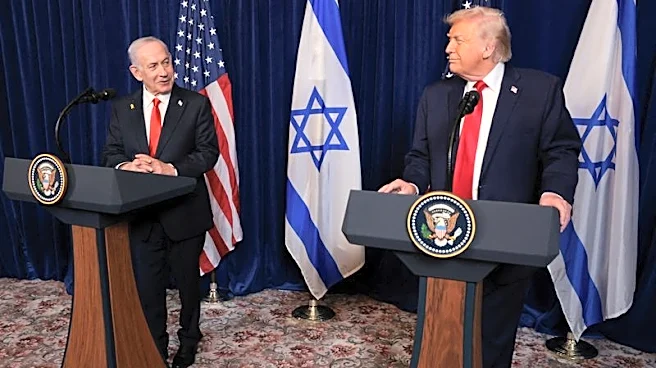
President Trump has confirmed reports of a heated phone call with Israeli Prime Minister Benjamin Netanyahu regarding Israeli military actions in Lebanon. During the call, Trump reportedly used strong
language to express his disapproval of Israel's continued military engagement with Hezbollah and threats to strike Beirut. Trump emphasized the need for de-escalation, citing concerns that further conflict could undermine U.S. efforts to negotiate peace with Iran. Despite the tension, Trump described the call as productive and reaffirmed the strong relationship between the U.S. and Israel, highlighting past cooperation and shared strategic interests.
Why It's Important?
This exchange underscores the complexities of U.S.-Israel relations, particularly in the context of Middle Eastern geopolitics. The U.S. has historically been a strong ally of Israel, but disagreements over military strategies and regional diplomacy can strain this relationship. Trump's intervention reflects broader U.S. concerns about stability in the Middle East and the potential impact of Israeli actions on diplomatic efforts with Iran. The situation highlights the delicate balance the U.S. must maintain in supporting its allies while pursuing broader regional peace and security objectives.
What's Next?
The U.S. will likely continue to engage in diplomatic efforts to de-escalate tensions in the region, with a focus on preventing further military escalation between Israel and Hezbollah. Trump's administration may also seek to advance negotiations with Iran, aiming to address nuclear proliferation concerns and stabilize the region. The outcome of these efforts could influence U.S. foreign policy and its role in Middle Eastern geopolitics, as well as the future of U.S.-Israel relations.