






What's Happening?
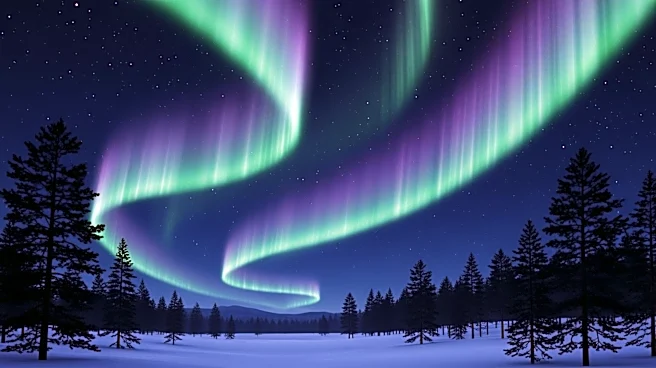
A powerful solar flare that erupted from the sun on May 10 has resulted in a coronal mass ejection (CME) heading towards Earth, increasing the likelihood of a Northern Lights display. According to Space.com, this cosmic event is expected to create a geomagnetic
storm, potentially visible from late May 12 into the early morning of May 13. The Northern Lights, or aurora borealis, are caused by charged particles from the sun interacting with Earth's magnetic field, resulting in vibrant displays of greens, purples, and blues in the sky. The best viewing opportunities are expected in parts of Alaska, Canada, and the northern United States, including northern Michigan and Maine. Viewers are advised to find dark, rural areas with clear views of the northern sky for optimal visibility.
Why It's Important?
The Northern Lights are a rare and awe-inspiring natural phenomenon that attract significant public interest and tourism. This event provides an opportunity for people in the northern U.S. to witness a spectacle that is typically more common in polar regions. The occurrence of such geomagnetic storms also highlights the dynamic nature of space weather and its potential impacts on Earth. While the visual display is harmless, stronger geomagnetic storms can affect satellite operations, power grids, and communication systems. This event underscores the importance of monitoring solar activity and understanding its effects on our planet.
What's Next?
As the CME approaches Earth, space weather experts will continue to monitor its progress and provide updates on the intensity and duration of the geomagnetic storm. Observers are encouraged to check real-time aurora forecasts from NOAA and use space weather apps to track solar wind and magnetic field activity. If weather conditions are favorable, this event could offer a memorable experience for those able to view it. Future solar activity will continue to be monitored for similar events, as the sun undergoes its regular cycle of activity.