






What's Happening?
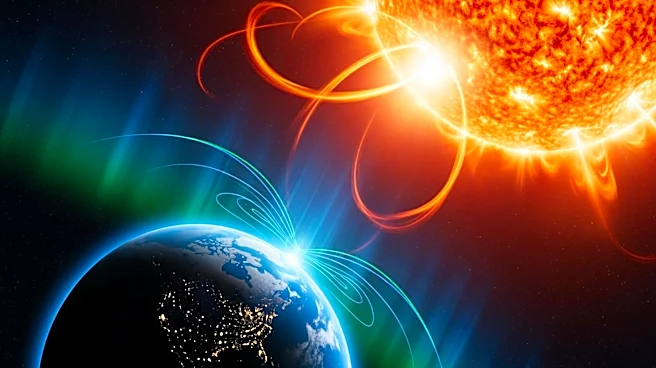
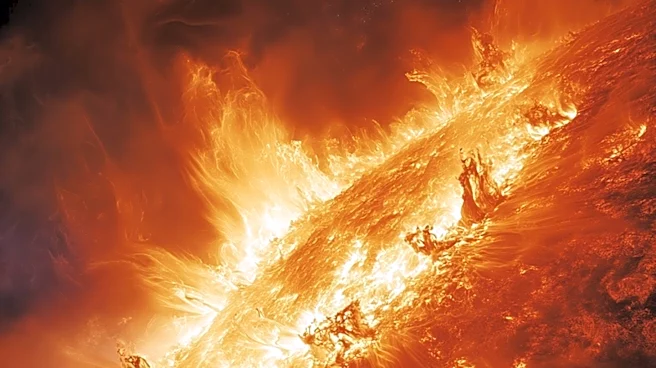
The National Oceanic and Atmospheric Administration's Space Weather Prediction Center has forecasted that three coronal mass ejections (CMEs) are expected to reach Earth, potentially making auroras visible in more states than usual. These CMEs, which
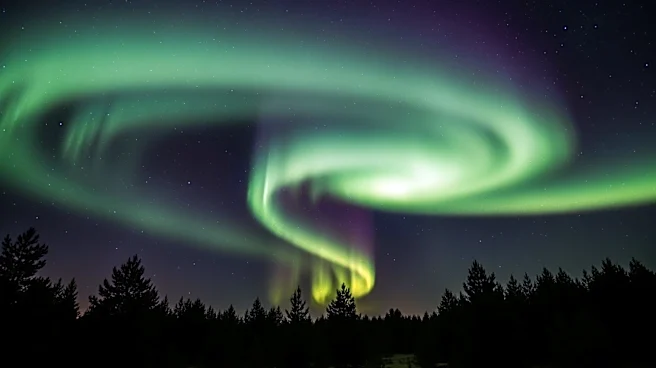
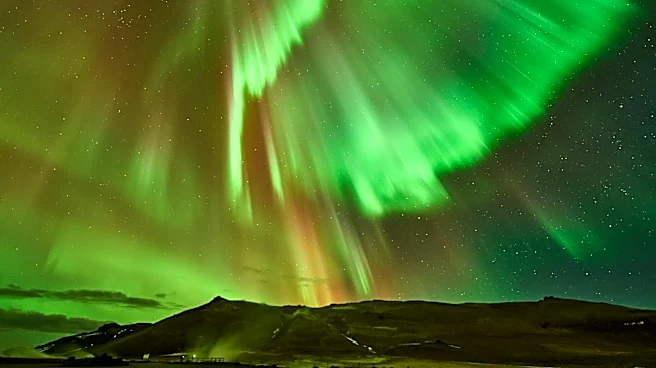
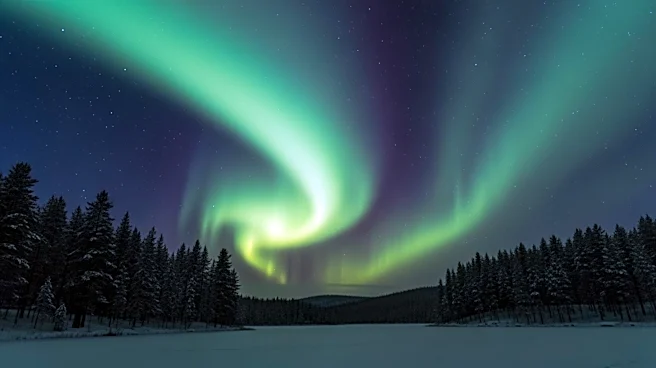
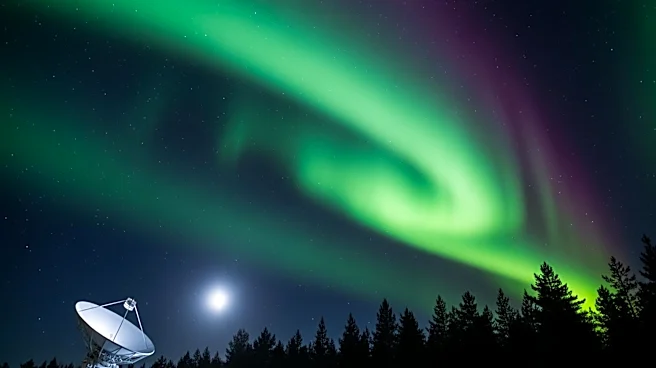
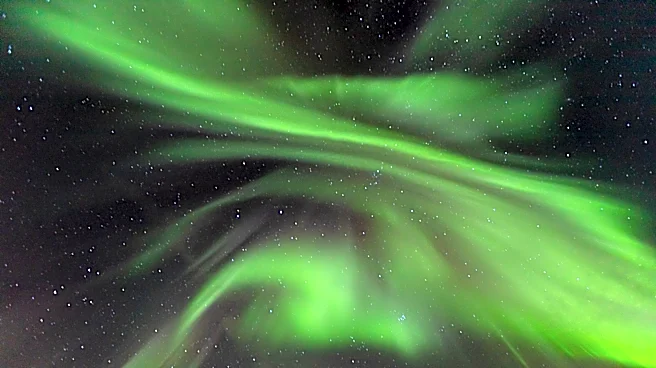
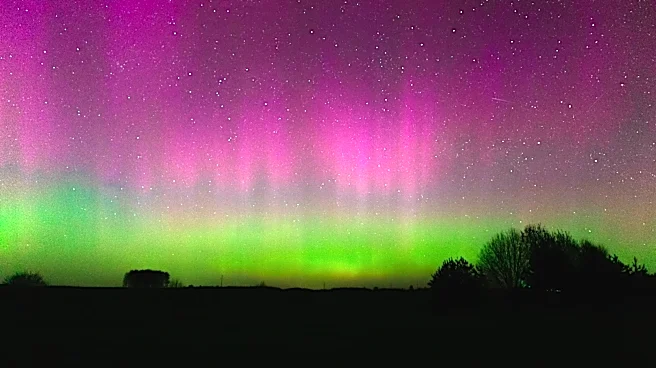
are massive bursts of solar material and magnetic fields from the sun's corona, are anticipated to arrive around mid-afternoon ET on Thursday. The interaction of these solar materials with Earth's atmosphere can create auroras, commonly known as the northern lights. The forecast suggests that the auroras could be visible over many northern states, extending from Illinois to Oregon. The geomagnetic storms are expected to reach a level G3, or 'strong,' which could have minor effects on technological infrastructure, such as requiring voltage corrections on power systems and causing intermittent satellite navigation issues.
Why It's Important?
The potential visibility of auroras in more southern states than usual is significant as it provides a rare opportunity for millions of people to witness this natural phenomenon. Additionally, the geomagnetic storms associated with the CMEs could impact technological systems, including power grids and satellite communications. This could have economic implications, particularly for industries reliant on these technologies. The forecasted geomagnetic activity underscores the importance of monitoring space weather and preparing for its potential impacts on infrastructure and daily life.
What's Next?
As the CMEs approach, NOAA will continue to monitor their trajectory and intensity. If the geomagnetic storms reach a G4, or 'severe,' level, more widespread voltage problems and disruptions to satellite navigation could occur. Stakeholders, including power companies and satellite operators, may need to implement contingency plans to mitigate potential disruptions. The public is advised to seek out dark locations for optimal aurora viewing, typically between 10 p.m. and 4 a.m. local time.