
What's Happening?
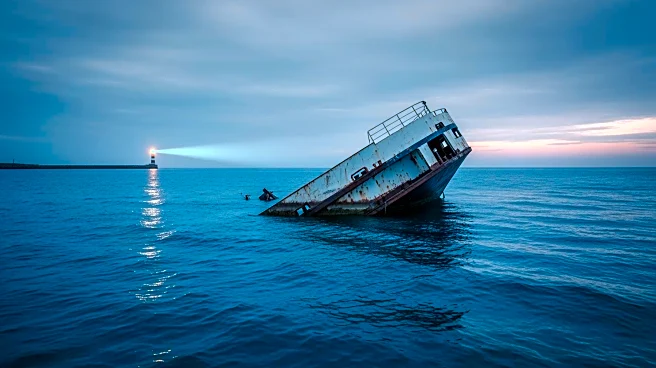
The Philippine Coast Guard (PCG) continues its search and rescue operations following the sinking of the ferry Trisha Kerstin 3 off Zamboanga on January 26. The death toll has risen to 29 after 11 more
bodies were recovered. The PCG, aided by local residents and fishermen, is still hopeful of finding survivors. The incident has raised questions about the actual number of passengers on board, as the list of survivors and deceased exceeds the official manifest. The ferry's operator, Aleson, has a history of maritime casualties, prompting the PCG to order its fleet to remain docked for inspection. The PCG has also opened Aleson's routes to other carriers temporarily to maintain passenger service. The cause of the sinking is under investigation, with a sudden wind squall being considered as a possible factor.
Why It's Important?
This incident highlights significant safety concerns within the Philippine maritime industry, particularly regarding passenger ferry operations. The discrepancy between the official manifest and the actual number of passengers raises issues about regulatory compliance and safety oversight. The PCG's decision to inspect Aleson's fleet and open its routes to other carriers underscores the urgency of addressing these safety lapses. The tragedy also puts pressure on national maritime safety regulators to enforce stricter safety audits and classifications for shipping lines. The outcome of these investigations and regulatory actions could have broader implications for maritime safety standards in the region.
What's Next?
The PCG's ongoing investigation into the cause of the sinking will be crucial in determining future safety measures. The national maritime safety regulator, MARINA, plans to conduct a comprehensive safety audit of all Philippine shipping lines, which could lead to stricter regulations and enforcement. The findings from these audits may result in reclassification of ships based on risk levels, potentially affecting the operations of ferry companies across the country. The outcome of these actions will be closely watched by stakeholders in the maritime industry and could lead to significant changes in safety protocols.