



What's Happening?
A recent study led by the University of Southampton has revealed that a significant drop in oceanic calcium levels over the past 66 million years may have contributed to Earth's transition from a greenhouse to an ice-capped climate. The research, published
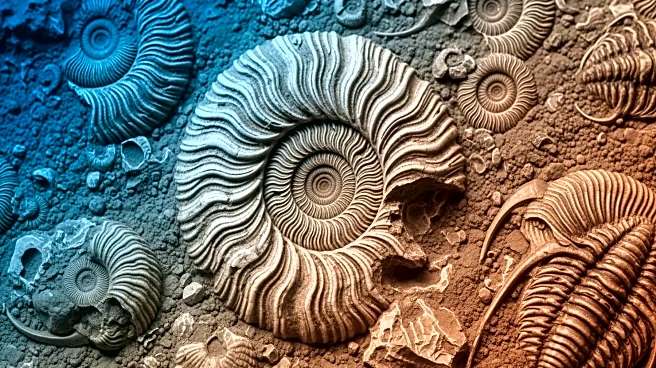
in the Proceedings of the National Academy of Sciences, indicates that the reduction in calcium levels altered marine carbon storage, leading to a decrease in atmospheric carbon dioxide and a subsequent global cooling. The study involved an international team of scientists who analyzed fossilized remains of marine organisms to construct a detailed record of ocean chemistry. The findings suggest that changes in seawater chemistry, particularly calcium concentrations, played a crucial role in driving long-term climate change.
Why It's Important?
This discovery provides new insights into the mechanisms behind historical climate shifts, highlighting the role of ocean chemistry in regulating atmospheric carbon dioxide levels. Understanding these processes is crucial for predicting future climate changes and developing strategies to mitigate their impacts. The study emphasizes the importance of marine ecosystems in carbon storage and the potential consequences of disrupting these systems. As climate change continues to be a pressing global issue, this research underscores the need for comprehensive approaches to address both atmospheric and oceanic factors influencing climate dynamics.