
What's Happening?
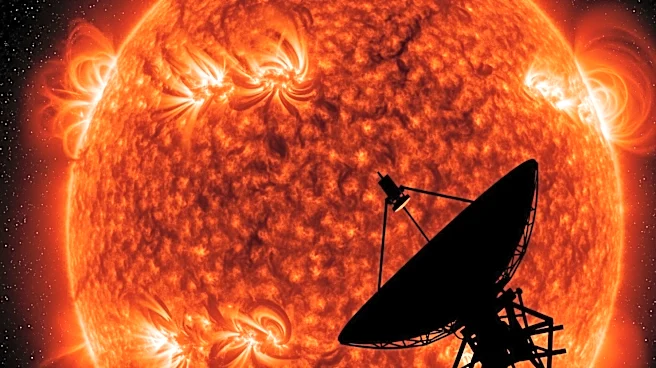
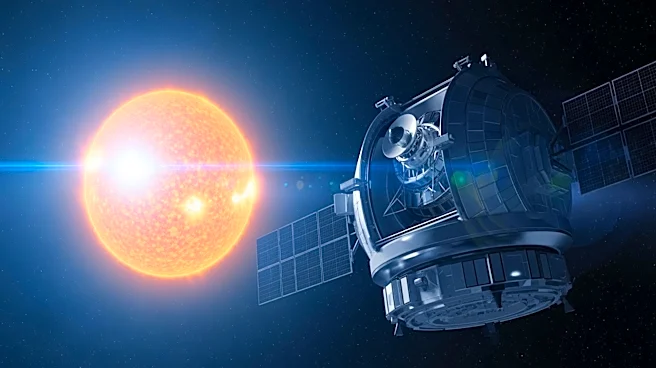
On April 27, 2001, the European Space Agency (ESA) announced that the Solar and Heliospheric Observatory (SOHO) could view the farside of the Sun, marking a significant advancement in space observation.
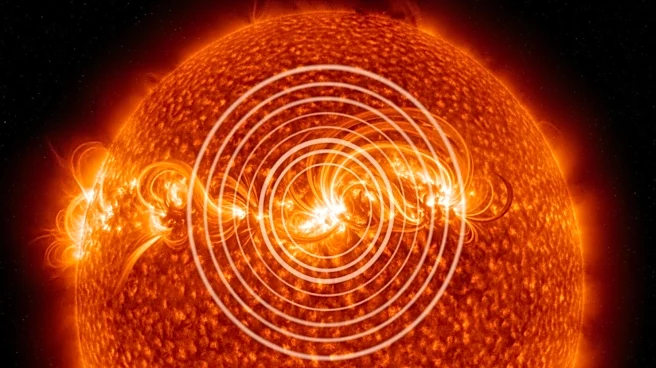
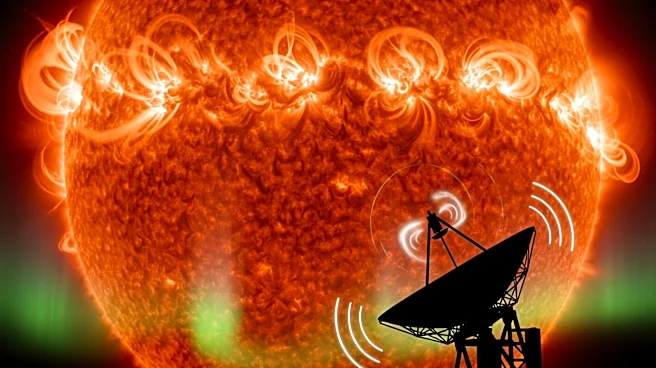
This capability allows scientists to predict space weather events that could impact Earth, such as solar flares and sunspots, which were previously unpredictable. SOHO uses two main instruments: the Michelson Doppler Imager (MDI) and the Solar Wind Anisotropies (SWAN) instrument. The MDI employs helioseismic holography to detect sound waves affected by sunspots, while SWAN maps ultraviolet light around the Sun, highlighting sunspot regions. This development supports technological systems on Earth and aids in the safe scheduling of crewed space missions.
Why It's Important?
The ability to forecast space weather is crucial for protecting Earth's technological infrastructure, including satellites, power grids, and communication systems, from solar disturbances. By predicting solar activity, SOHO helps mitigate potential disruptions and damage. This capability is also vital for the safety of astronauts on space missions, as it allows for better planning and risk management. The observatory's advancements contribute to a deeper understanding of solar dynamics and their effects on the solar system, enhancing scientific knowledge and technological resilience.