








What's Happening?
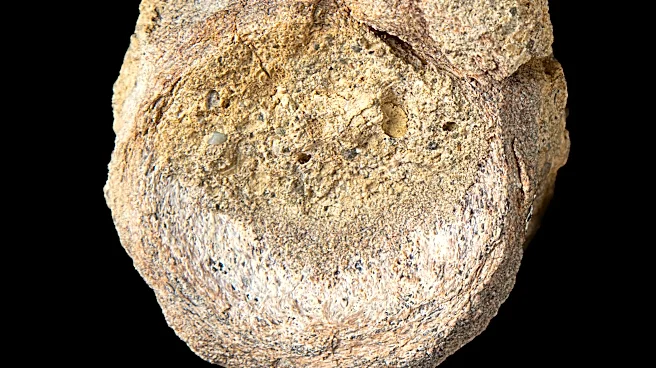
A vertebra discovered in 1985 on James Ross Island, Antarctica, has been identified as part of a titanosaur, a giant herbivorous dinosaur. Initially thought to be a marine reptile fossil, the bone was re-evaluated and confirmed to belong to a sauropod
that lived approximately 82 million years ago. This discovery, detailed in a study published in Acta Palaeontologica Polonica, provides evidence of a once-forested Antarctica, home to diverse dinosaur species during the Late Cretaceous period.
Why It's Important?
The identification of the titanosaur fossil in Antarctica offers significant insights into the continent's prehistoric environment, suggesting it was once a lush, temperate region. This challenges existing theories about dinosaur distribution and highlights the potential for further discoveries that could enhance our understanding of ancient ecosystems and climate conditions. The find also raises questions about dinosaur migration patterns and the historical connections between continents.