



What's Happening?
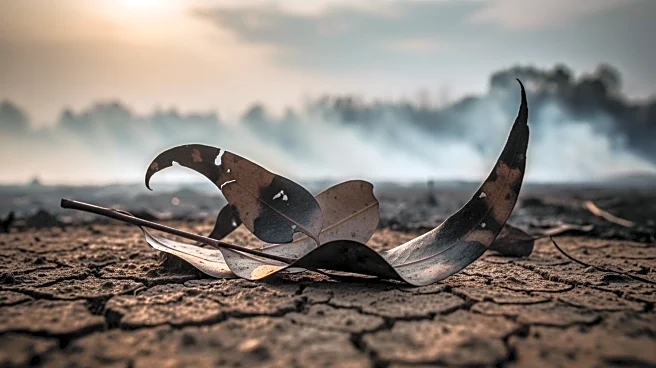
Australia's Department of Climate Change, Environment, Energy and Water has confirmed that emissions from bushfires are not included in the country's National Greenhouse Gas Inventory. This decision has sparked debate, as the emissions from the Black
Summer bushfires alone amounted to over 800 Mt CO2-e, nearly double the country's annual accountable emissions. While bushfire emissions are excluded, emissions from prescribed burning and land management activities are counted, creating a perceived inconsistency in the accounting process. The exclusion is based on the classification of bushfires as 'natural disturbances,' which are considered beyond human control.
Why It's Important?
The exclusion of bushfire emissions from national accounting has significant implications for Australia's climate policy and international commitments. By not accounting for these emissions, the country may appear to be meeting its reduction targets more effectively than it actually is. This could undermine efforts to address climate change and reduce greenhouse gas emissions. The decision also raises questions about the effectiveness of current land management practices and the need for more comprehensive strategies to mitigate bushfire risks and their environmental impact.
What's Next?
The debate over bushfire emissions accounting is likely to continue, with potential implications for future climate policies and international negotiations. Australia may face pressure to revise its accounting practices to provide a more accurate representation of its emissions. This could lead to changes in land management strategies and increased investment in fire prevention and mitigation efforts. The issue may also influence discussions at upcoming international climate conferences, where countries will assess progress towards global emissions reduction goals.