


What's Happening?
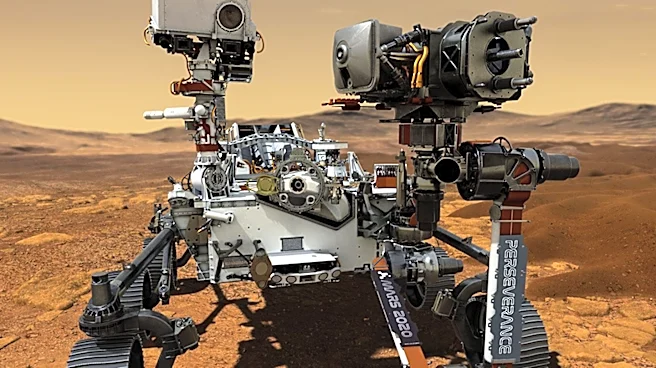
A technique developed by NASA, known as decorrelation stretch, originally used to enhance satellite imagery of the Martian surface, is now being applied to reveal faded ancient images on Earth. This method heightens contrasts in digital imagery, making
previously invisible features easier to spot. Rock art enthusiast Jon Harman, inspired by NASA's use of the technique on Mars images around 2005, adapted the algorithm for studying ancient, faded artwork. Harman, who also has a background in medical imaging, found a NASA paper from 1996 explaining the algorithm, which was written by JPL employee Ronald Alley. Alley had developed applications for the Advanced Spaceborne Thermal Emission and Reflection Radiometer (ASTER) on NASA’s Terra satellite, recognizing the potential of decorrelation stretch for gleaning information from ASTER imagery. Harman subsequently created a plug-in for the open-source program ImageJ and later developed smartphone apps that mimic the technique.
Why It's Important?
This innovative application of NASA technology has significant implications for archaeology and cultural preservation. By making faded ancient images visible, researchers can uncover previously unknown historical and cultural artifacts, providing new insights into past civilizations. The technique has already led to the discovery of approximately 200 paintings in the ancient Cambodian temple of Angkor Wat between 2010 and 2012, which had been invisible to the naked eye. Its widespread adoption, evidenced by hundreds of requests for Harman's Dstretch plug-in and thousands of app downloads, demonstrates its utility in the field. Beyond rock art, the method has been used to find buried remains of ancient Greek buildings and examine tattoos on mummified human remains, expanding its impact on various archaeological investigations and contributing to a deeper understanding of human history.
What's Next?
The continued application and refinement of the decorrelation stretch technique are expected to further revolutionize archaeological discovery and preservation efforts globally. As more researchers and enthusiasts adopt the method, it is likely to uncover additional hidden ancient artworks and structures, potentially leading to new historical interpretations. The development of smartphone applications has democratized access to this powerful imaging tool, enabling a broader community to contribute to discovery. Future advancements might include integrating this technique with other imaging technologies or artificial intelligence to automate the detection of faded imagery, making the process even more efficient and widespread. The ongoing use of this NASA-derived technology will continue to bridge the gap between space exploration and terrestrial cultural heritage.
Beyond the Headlines
The story highlights a fascinating example of technological cross-pollination, where advancements made for space exploration find unexpected and profound applications on Earth. It underscores the broader societal benefits of investing in scientific research, even when its initial purpose seems distant from everyday concerns. The ability to reveal hidden cultural heritage raises ethical considerations regarding the preservation and interpretation of newly discovered artifacts, particularly in sensitive historical sites. It also emphasizes the role of individual initiative, as Jon Harman's personal interest and professional background were crucial in translating a complex scientific algorithm into a widely accessible and impactful tool. This convergence of space science, personal passion, and archaeological discovery exemplifies how innovation can transcend its original domain to enrich human understanding and cultural appreciation.