



What's Happening?
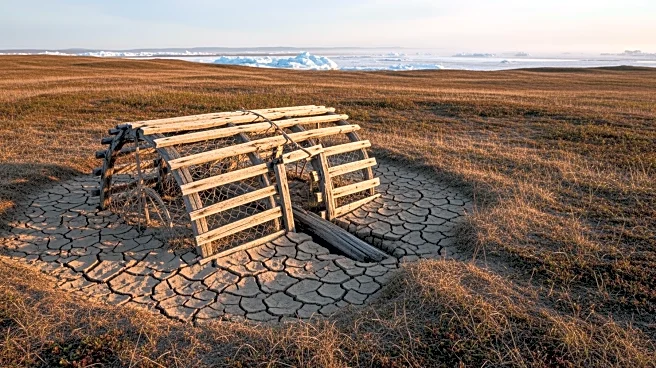
A hiker named Helge Titland discovered a 1,500-year-old reindeer trap in Norway's Vestland County, revealing ancient hunting practices. The trap, found at 4,600 feet above sea level, includes large wooden fences and well-preserved tools from the Early
Iron Age. Researchers from the University Museum of Bergen and Vestland County confirmed the trap's age and significance. The site also contained a brooch made from reindeer antler, wooden arrows, and iron spearheads. The trap was likely abandoned during a colder period in the mid-sixth century and preserved under snow and ice until recent warming trends began melting the ice.
Why It's Important?
The discovery underscores the accelerating pace of global ice loss, which poses significant risks to modern communities. Mountain glaciers and ice sheets are crucial freshwater reservoirs, and their disappearance threatens water supplies and increases flooding risks. Melting ice also contributes to rising sea levels, endangering coastal homes and altering ecosystems. These changes allow disease-carrying insects to expand into new areas previously protected by cold temperatures. The scientific consensus indicates that human activity exacerbates these environmental changes, making natural disasters more severe and frequent.
What's Next?
Efforts are underway to improve monitoring systems for tracking ice-loss patterns and predicting impacts on water supplies and weather systems. Mountain regions are adopting water conservation strategies and developing alternative storage systems to mitigate the loss of ice reserves. Reducing reliance on pollution-generating energy sources is crucial to slowing warming trends. Public awareness and individual actions can contribute to preserving the planet's remaining ice reserves.