


What's Happening?
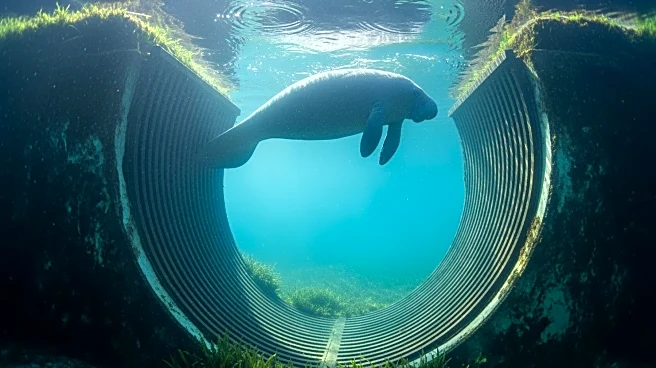
In Brevard County, Florida, a juvenile male manatee named 'Melby' was rescued from a storm drain by local fire rescue units and wildlife authorities. The manatee, weighing over 400 pounds, was trapped in a 'baffle box,' a structure designed to filter
debris from stormwater. The rescue operation took place in Melbourne Beach, a coastal town southeast of Orlando. The Florida Fish and Wildlife Conservation Commission, along with other agencies, responded quickly after a public call to a wildlife hotline. Melby was found underweight with multiple wounds but is now recovering at SeaWorld Orlando, showing interest in food and moving independently.
Why It's Important?
The rescue of Melby highlights the ongoing challenges faced by manatees, a threatened species native to Florida. Manatees are vulnerable to habitat loss, pollution, and human activities, such as boat collisions. The successful rescue underscores the importance of public awareness and quick response in wildlife conservation efforts. It also draws attention to the broader issue of manatee mortality, which reached record highs in recent years due to factors like seagrass loss. The incident serves as a reminder of the delicate balance between human development and wildlife preservation.
What's Next?
Melby will continue to receive care and rehabilitation at SeaWorld Orlando. The Florida Fish and Wildlife Conservation Commission will monitor his recovery and assess the conditions that led to his entrapment. This event may prompt further examination of stormwater infrastructure to prevent similar incidents. Additionally, ongoing conservation efforts will focus on mitigating threats to manatees, such as improving water quality and protecting habitats. Public education campaigns may be enhanced to encourage reporting of wildlife in distress, ensuring timely interventions.
Beyond the Headlines
The rescue operation involved multiple agencies, showcasing the collaborative efforts required in wildlife conservation. It also highlights the role of community involvement in protecting endangered species. The incident may lead to increased scrutiny of urban planning and infrastructure design to accommodate wildlife needs. Furthermore, it raises ethical considerations about human responsibility in preserving biodiversity and the impact of climate change on marine life. Long-term, this could influence policy decisions regarding environmental protection and sustainable development.