




What's Happening?
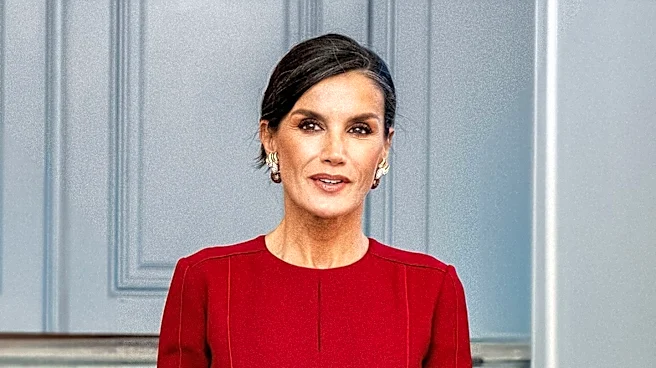
Queen Letizia of Spain, alongside King Felipe VI, attended a funeral mass for the victims of a high-speed train crash at the Toledo Cathedral in Toledo. The Spanish royals appeared somber as they greeted bishops and entered the cathedral. Dressed in mourning
attire, they participated in the mass, which was presided over by the Archbishop of Toledo, Francisco Cerro, and attended by five bishops of Castilla-La Mancha. The ceremony honored the 69 lives lost in the Urda train crash and recognized the efforts of the emergency teams. The King and Queen had previously visited the University Hospital of Toledo to offer comfort and support to victims and their families. The crash involved a collision between two trains on the Madrid–Seville high-speed rail line, with one train reportedly stationary at the time. This incident marks the country's worst rail accident since 2013.
Why It's Important?
The attendance of Queen Letizia and King Felipe VI at the funeral underscores the profound impact of the train crash on Spain. Their presence provides a visible symbol of national mourning and solidarity with the affected families, which can be crucial for public morale during times of tragedy. Such royal engagements often serve to unite a nation and demonstrate leadership's empathy. The incident itself highlights ongoing concerns regarding railway safety and infrastructure, particularly for high-speed lines. While the immediate focus is on the victims and their families, the long-term implications could involve reviews of safety protocols, maintenance procedures, and emergency response mechanisms to prevent future occurrences. The scale of the tragedy, with 69 lives lost, places significant pressure on authorities to conduct thorough investigations and implement necessary reforms, potentially influencing public trust in national transportation systems.
What's Next?
Following the funeral, investigations into the cause of the Urda train crash are expected to continue, aiming to determine the precise circumstances that led to the collision. Authorities will likely analyze factors such as signal failures, human error, or mechanical malfunctions. The findings of these investigations could lead to significant policy changes in railway safety regulations and operational procedures across Spain. There may be calls for enhanced safety measures, technological upgrades, and more rigorous training for railway personnel. Additionally, the government and railway operators will face the task of providing ongoing support to the victims' families and the injured, which could include compensation and long-term care. Public and political pressure for accountability and preventative actions will likely remain high as the nation grapples with the aftermath of this tragic event.
Beyond the Headlines
The train crash and the royal family's response extend beyond immediate grief, touching upon broader societal and ethical considerations. The incident raises questions about the balance between speed and safety in modern transportation infrastructure, particularly in high-speed rail networks. Ethically, there will be scrutiny over corporate responsibility and governmental oversight in ensuring public safety. Culturally, such tragedies often lead to a period of national reflection on collective resilience and the value of human life. The public's perception of national institutions, including the monarchy and government, can be significantly shaped by their response to crises. The event may also spark discussions about the psychological impact of mass casualty incidents on communities and the importance of mental health support for survivors, first responders, and affected families, highlighting the long-term societal costs beyond the immediate loss of life.