






What's Happening?
Indonesia has reached self-sufficiency in eight strategic food commodities, as announced by Agriculture Minister Andi Amran Sulaiman. This achievement is part of the country's efforts to enhance national food security. The commodities include rice, maize,
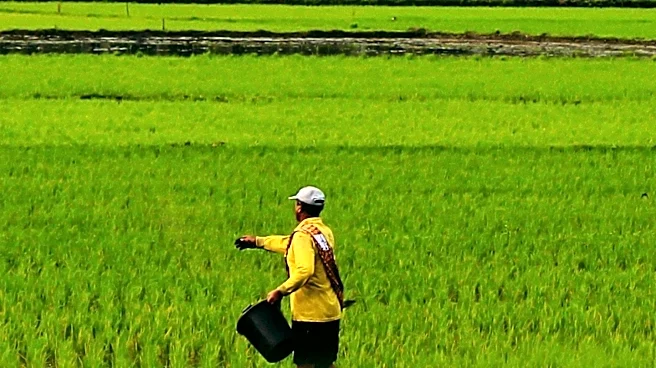
large chillies, cayenne pepper, consumer sugar, chicken, eggs, and shallots. Some of these commodities are now being exported, indicating a surplus in production. The Government Rice Reserve has surpassed 5 million tonnes, marking the highest level in the nation's history. The agricultural sector has also recorded a 5.74% GDP growth. These results have been facilitated by measures such as a higher government purchase price for unhusked rice, improved fertiliser distribution, and reduced prices for subsidised fertilisers. President Prabowo Subianto emphasized that food security is a national priority, highlighting the importance of expanding productive farmland, improving water management, and supporting farmers.
Why It's Important?
The achievement of self-sufficiency in key food commodities is significant for Indonesia as it strengthens the country's food security and reduces dependency on imports. This development is crucial for ensuring a stable food supply for the population, which is a fundamental aspect of national security and economic stability. The surplus in production and the ability to export some commodities can enhance Indonesia's position in the global agricultural market. The growth in the agricultural sector also contributes positively to the country's GDP, supporting overall economic development. By prioritizing food security, Indonesia is taking proactive steps to safeguard its population against potential global food shortages and price volatility.
What's Next?
Indonesia is likely to continue its focus on agricultural development to maintain and enhance its self-sufficiency in food commodities. The government may implement further policies to support farmers, improve agricultural infrastructure, and invest in technology to increase productivity. There could be an emphasis on sustainable agricultural practices to ensure long-term food security. Additionally, Indonesia might explore new markets for exporting its surplus commodities, which could further boost the agricultural sector's contribution to the economy. The government may also monitor global food trends to adapt its strategies accordingly.
Beyond the Headlines
The move towards self-sufficiency in food commodities could have broader implications for Indonesia's socio-economic landscape. It may lead to increased rural development and job creation in the agricultural sector, improving livelihoods in farming communities. The focus on food security could also drive innovation in agricultural practices and technologies, positioning Indonesia as a leader in sustainable agriculture. Furthermore, the emphasis on self-sufficiency aligns with global trends towards reducing reliance on imports and enhancing domestic production capabilities, which could inspire similar initiatives in other countries.