

What's Happening?
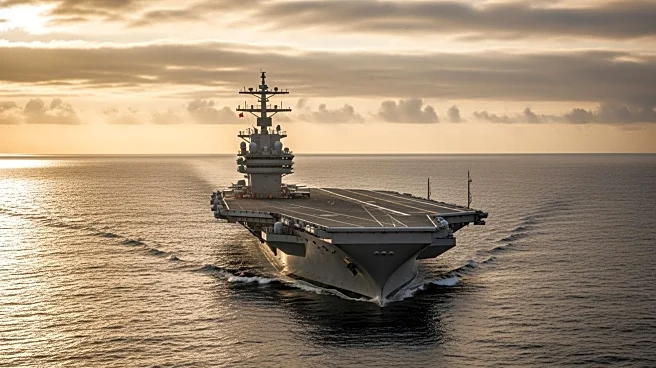
The USS Gerald R. Ford, a nuclear-powered aircraft carrier, is approaching a record deployment duration as it returns to the Mediterranean. The carrier's deployment, which began in June 2025, has extended beyond eight months, highlighting the Navy's focus
on crew resilience and sustained readiness. The Ford's strategic repositioning through the Suez Canal places it within reach of key flashpoints from North Africa to the Middle East. This move is part of a broader U.S. military posture aimed at disrupting illicit activities and responding to rising tensions, particularly involving Iran. The deployment has drawn reactions from regional actors, including a military mobilization by Venezuela as the carrier entered the Caribbean. The Navy's extended deployment of the Ford is seen as a test of its new technologies and a demonstration of its operational capabilities.
Why It's Important?
The extended deployment of the USS Gerald R. Ford underscores the U.S. Navy's strategic flexibility and readiness to respond to global tensions. The carrier's presence in the Mediterranean serves as a deterrent and provides rapid response options in volatile regions. This deployment also tests the Navy's ability to sustain long-term operations, which is crucial given the increasing global demand for U.S. naval presence. The Ford's advanced technologies, such as the Electromagnetic Aircraft Launch System, are being evaluated in real-world conditions, potentially influencing future naval strategies and procurement decisions. The deployment's impact on fleet scheduling and sailor dwell time highlights the challenges of maintaining a global naval presence while ensuring personnel well-being.
What's Next?
If the USS Gerald R. Ford remains deployed past mid-April, it will set a new post-Vietnam era benchmark for U.S. aircraft carrier deployments. The Navy will need to manage the implications of this extended deployment on fleet readiness and personnel recovery. The carrier's continued presence in the Mediterranean may influence regional dynamics, particularly in relation to Iran and other Middle Eastern actors. The Navy will likely assess the operational effectiveness of the Ford's technologies and consider adjustments to its deployment strategies. The broader U.S. military posture in the region, including additional air assets in Puerto Rico, will continue to evolve in response to geopolitical developments.