
What's Happening?
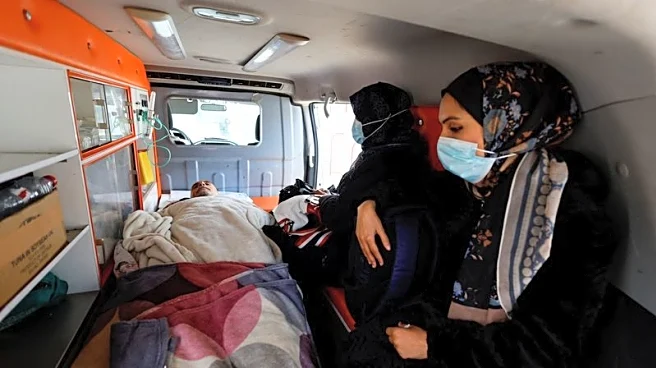
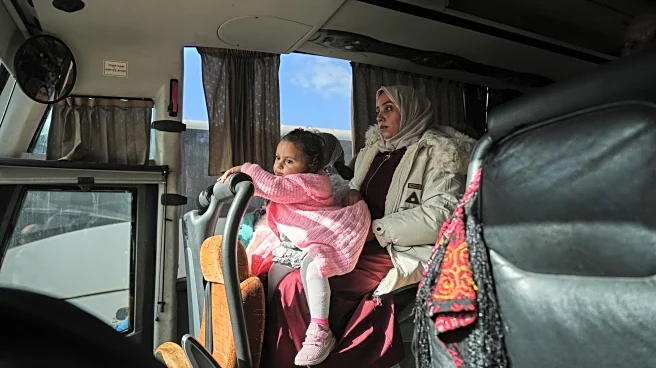
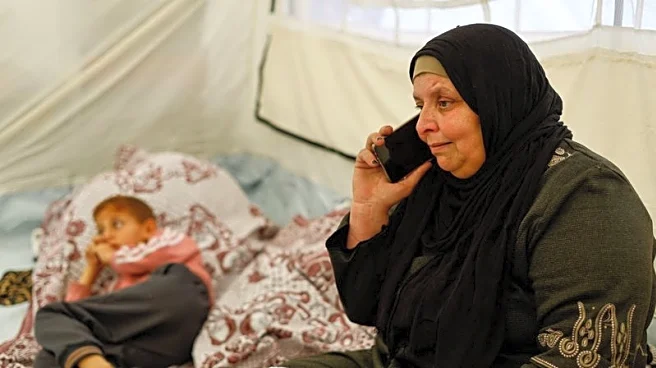
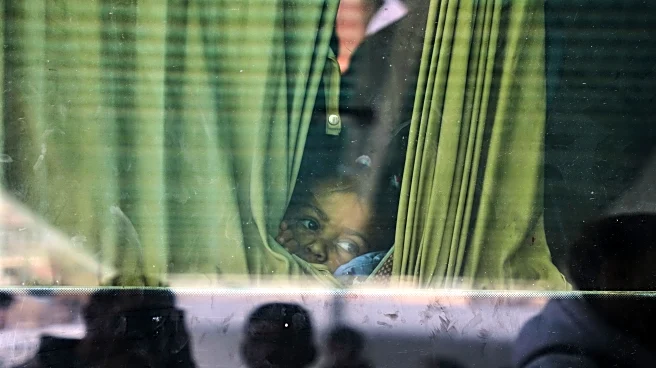
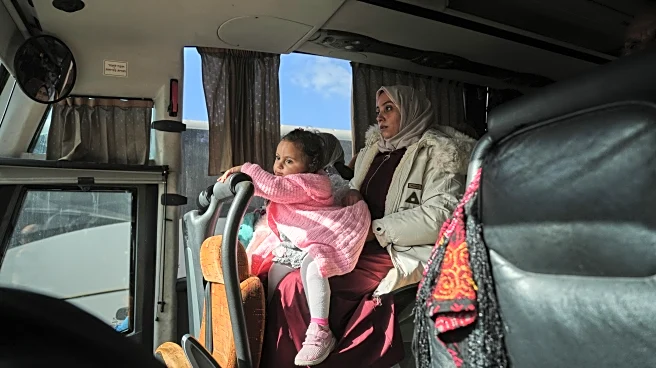
Heavy winter rains have flooded camps in the Gaza Strip, affecting Palestinians displaced by two years of war. The flooding has left many struggling to stay dry in tents that have deteriorated over months of use. Israeli Prime Minister Benjamin Netanyahu
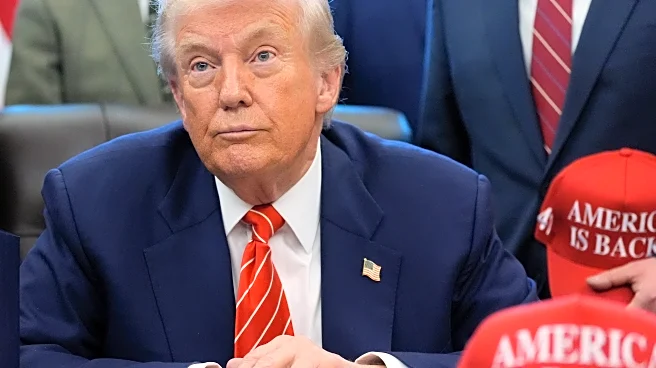
is traveling to the U.S. for a meeting with President Trump to discuss the second phase of the ceasefire agreement, which aims to increase humanitarian aid to Gaza. Despite the ceasefire, humanitarian deliveries have fallen short, with aid organizations reporting that the need far exceeds the supplies entering Gaza. The situation is dire, with at least 12 people dying from hypothermia or weather-related collapses of war-damaged homes.
Why It's Important?
The flooding in Gaza highlights the ongoing humanitarian challenges faced by Palestinians in the region. The inadequate response to the humanitarian needs exacerbates the suffering of displaced individuals, many of whom are living in precarious conditions. The meeting between Netanyahu and President Trump is crucial for advancing the ceasefire agreement and ensuring that sufficient aid reaches those in need. The situation underscores the importance of international cooperation and effective aid distribution to alleviate the humanitarian crisis in Gaza.
What's Next?
The next phase of the ceasefire agreement involves deploying an international stabilization force, establishing a technocratic governing body for Gaza, and disarming the Hamas militant group. However, progress has been slow, with both Israel and Hamas accusing each other of truce violations. The international community will need to address these challenges to ensure the successful implementation of the ceasefire and improve living conditions for Palestinians in Gaza.