
What's Happening?
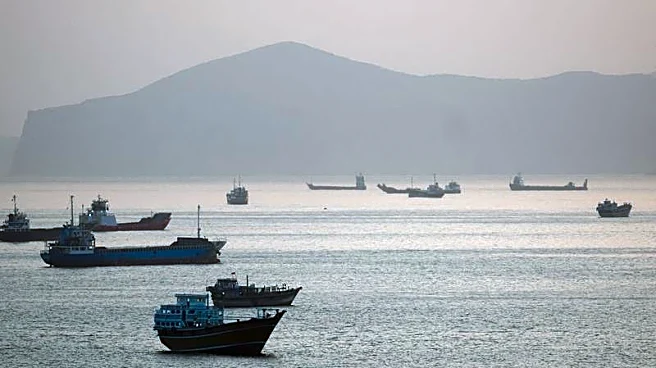
President Donald Trump has rejected Iran's latest proposal to end the ongoing conflict, labeling it as 'not acceptable.' This development comes in the wake of a recent attack on a cargo ship near the Strait
of Hormuz, where the vessel was swarmed by multiple small boats. The rejection of Iran's proposal indicates a continuation of hostilities and a lack of diplomatic resolution in sight. The conflict has significant implications for the region, particularly concerning the security of the Strait of Hormuz, a critical passage for global oil shipments.
Why It's Important?
The rejection of Iran's peace proposal by President Trump underscores the persistent tensions between the US and Iran, with potential repercussions for international diplomacy and regional stability. The Strait of Hormuz is a strategic chokepoint for global energy supplies, and any disruption can lead to significant economic impacts, including fluctuating oil prices. The ongoing conflict and lack of resolution may strain US relations with other countries dependent on Middle Eastern oil, potentially leading to broader geopolitical shifts.
What's Next?
With the rejection of the peace proposal, the conflict is likely to continue, potentially escalating military engagements in the region. The US may increase its military presence to secure maritime routes, while Iran might seek alternative diplomatic channels or alliances to counter US actions. The international community may call for renewed negotiations to prevent further escalation and ensure the security of global energy supplies.