



What's Happening?
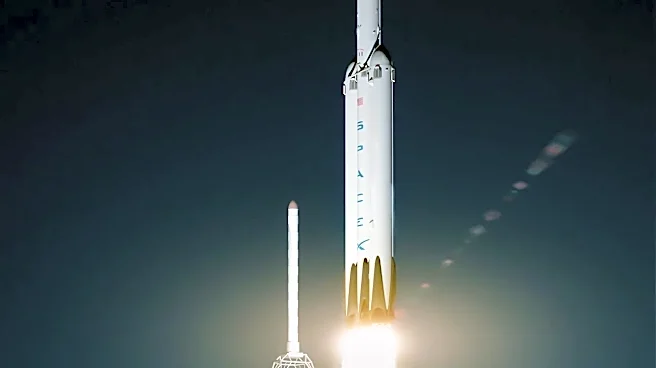
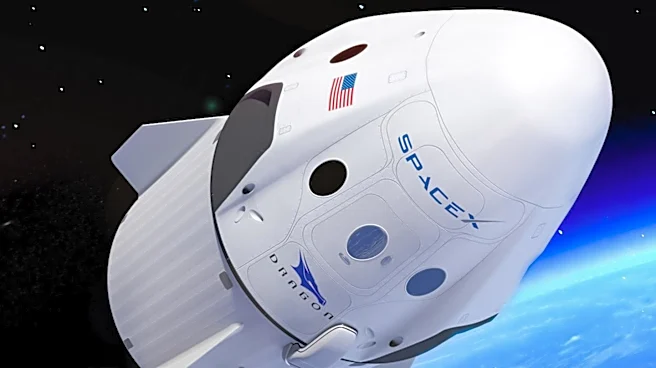
NASA has expanded its Commercial Crew Transportation Capability (CCtCap) contract with SpaceX by ordering three additional crewed Dragon missions. This modification, valued at $946 million, covers Crew-15, Crew-16, and Crew-17, along with the comprehensive
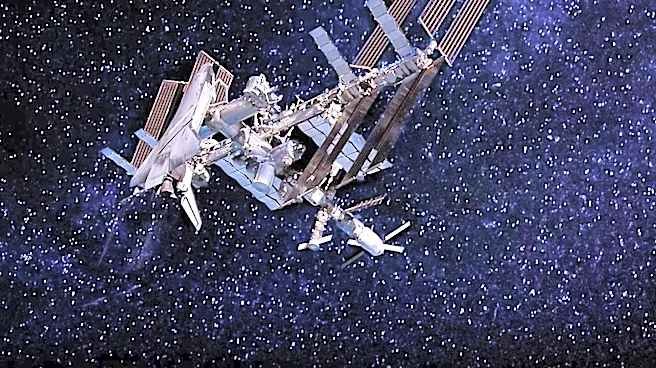
operational support required for each flight. These new missions are scheduled for readiness in 2027 and 2028, reinforcing NASA's strategy to maintain a consistent human presence on the International Space Station (ISS). The contract extension includes launch and ground operations, in-orbit services, return and recovery procedures, cargo transportation, and the provision of a lifeboat capability while the Dragon spacecraft is docked at the station. This brings the total value of NASA's CCtCap contract with SpaceX to $5.92 billion, with the performance period now extending through 2030.
Why It's Important?
This contract modification is crucial for the continuity of U.S. human spaceflight operations and the sustained functionality of the International Space Station. By securing additional flights with SpaceX, NASA ensures reliable transportation for astronauts and critical cargo, which is essential for ongoing scientific research and maintenance activities aboard the ISS. The partnership with commercial providers like SpaceX, established in 2014, has diversified NASA's access to space, reducing reliance on a single provider and fostering competition and innovation in the aerospace industry. This move also underscores the U.S.'s commitment to international collaboration in space, as the ISS is a joint project involving multiple countries. The extended contract through 2030 signifies long-term planning for space exploration and the utilization of low Earth orbit, providing stability for both NASA and its commercial partners.
What's Next?
With these three new missions, SpaceX will continue to play a pivotal role in transporting astronauts to and from the ISS through 2030. The focus will be on preparing for Crew-15, Crew-16, and Crew-17, ensuring all operational aspects, from launch to recovery, are meticulously planned and executed. This long-term commitment allows for strategic planning of crew rotations, scientific experiments, and station maintenance. NASA will continue to work closely with SpaceX to ensure mission readiness and safety standards are met. The arrangement also allows NASA to maintain two commercial providers for crew transportation, with Boeing also developing its Starliner spacecraft, ensuring redundancy and flexibility in its space access capabilities. This sustained rhythm of missions is vital for the scientific productivity and operational integrity of the ISS as human spaceflight progresses into the next decade.