




What's Happening?
Asia is experiencing a significant shift in its power dynamics, characterized by strategic hedging and economic realignment among its nations. Countries like Indonesia are diversifying their international alignments, balancing relationships with major
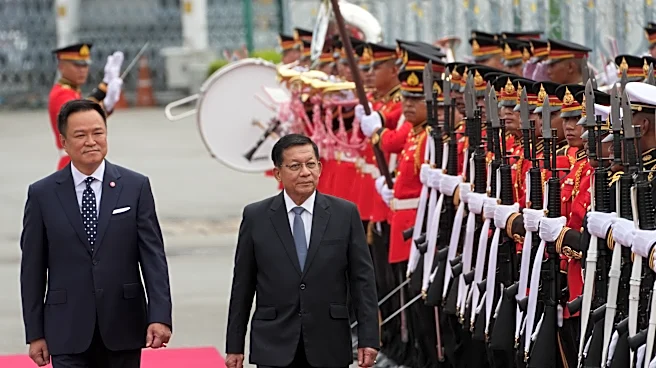
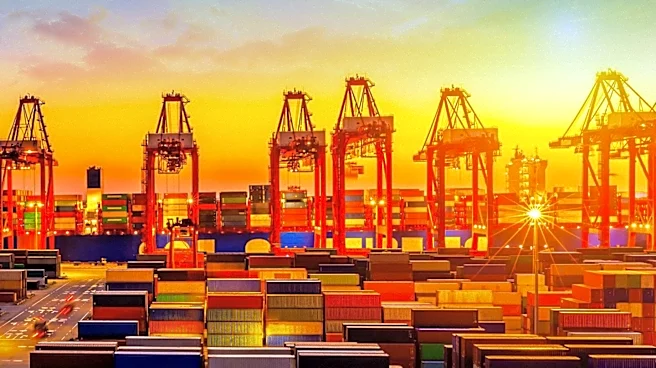
powers such as China and the United States. Indonesia, under President Prabowo Subianto, is strengthening ties with China, its largest trading partner, while also maintaining significant defense cooperation with the U.S. and Japan. This approach reflects a broader trend in Asia where nations are not committing to formal alliances but are instead diversifying their partnerships to navigate the complex geopolitical landscape. This strategic hedging is accompanied by economic restructuring, as seen in the partial decoupling of supply chains and the emergence of new trade and investment patterns across the region.
Why It's Important?
The strategic and economic shifts in Asia have profound implications for global trade and geopolitical stability. As Asian countries like Indonesia engage in strategic hedging, they are redefining their roles in the international arena, potentially reducing the influence of traditional powers like the United States. This realignment could lead to a more multipolar world order, affecting global trade flows and investment patterns. The economic restructuring, including the diversification of supply chains, is a response to vulnerabilities exposed by the COVID-19 pandemic and geopolitical tensions. This shift could impact U.S. industries reliant on Asian supply chains and influence global economic policies. The strategic hedging by Asian nations also highlights the importance of maintaining flexible foreign policies to adapt to changing global dynamics.
What's Next?
As Asia continues to navigate its strategic and economic realignment, the region is likely to see further diversification of alliances and partnerships. Countries may continue to strengthen bilateral and multilateral ties outside traditional power structures, potentially leading to new regional alliances. The ongoing economic restructuring, including initiatives like Japan's semiconductor program and India's focus on supply chain diversification, will likely continue to shape global trade dynamics. The U.S. and other global powers may need to reassess their strategies in Asia to maintain influence and adapt to the evolving geopolitical landscape. This could involve enhancing diplomatic engagement and economic cooperation with Asian nations to counterbalance the growing influence of China and other regional powers.
Beyond the Headlines
The strategic hedging and economic realignment in Asia could have long-term implications for global governance and international relations. The shift towards a multipolar world order may challenge existing international institutions and norms, prompting discussions on reforming global governance structures. The economic decoupling and diversification of supply chains could lead to increased regionalism, with countries prioritizing local and regional trade agreements over global ones. This trend may also influence the development of new financial systems and payment mechanisms, as countries seek alternatives to traditional dollar-based systems. The evolving geopolitical landscape in Asia underscores the need for adaptive and forward-thinking policies to address the complexities of a rapidly changing world.