
What's Happening?
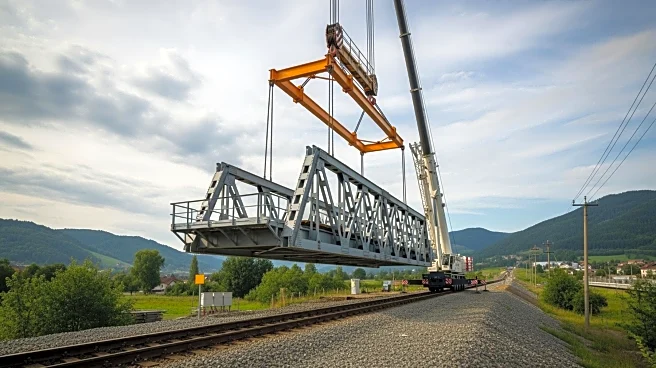
Network Rail has successfully completed the installation of a new £5.9 million railway bridge in West Dunbartonshire, Scotland. The bridge was rolled into position during a planned railway line closure
that began on Christmas Eve and will continue until January 2. The 1,860-tonne concrete structure was moved into place on Boxing Day, marking a significant milestone in the project. This development is part of the Bowling Strategic Development Site initiative, aimed at enhancing infrastructure and economic growth in the region. The project is funded through the Glasgow City Region Deal, a collaborative effort between the UK and Scottish governments and local authorities. Replacement bus services are currently operating to accommodate passengers during the closure.
Why It's Important?
The installation of the new railway bridge is a critical component of the Bowling Strategic Development Site, which seeks to improve infrastructure and stimulate economic growth in West Dunbartonshire. By enhancing road access to the area, particularly a former Exxon industrial site on the banks of the River Clyde, the project is expected to attract further development and investment. This initiative is part of the broader Glasgow City Region Deal, which aims to boost regional economic performance through improved infrastructure. The successful completion of such a large-scale engineering project demonstrates effective collaboration between government entities and local authorities, potentially serving as a model for future infrastructure projects.
What's Next?
With the bridge now in place, the focus will shift to completing the remaining aspects of the Bowling Strategic Development Site. The railway line is scheduled to reopen on January 2, allowing normal train services to resume. The enhanced road access provided by the new bridge is expected to facilitate further development in the area, attracting businesses and investors. Local authorities, including West Dunbartonshire Council, will continue to oversee the project's progress, ensuring that the infrastructure improvements lead to tangible economic benefits for the region.