






What's Happening?
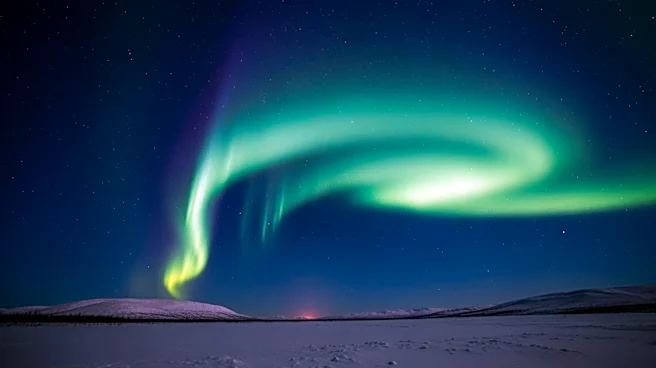
The aurora borealis, or northern lights, may be visible tonight due to the lingering effects of a moderate geomagnetic storm. This storm was triggered by a coronal mass ejection that passed Earth on May 4. While solar activity has weakened, conditions
may still allow for aurora visibility at higher latitudes, particularly in parts of Canada, Alaska, and the northern U.S. The best viewing times are during the late-night hours when geomagnetic activity peaks.
Why It's Important?
The northern lights are a spectacular natural phenomenon that draws interest from both scientists and the general public. They provide insights into solar activity and its interactions with Earth's magnetic field. For communities in higher latitudes, the aurora can boost tourism and local economies as visitors seek to witness this breathtaking display. Additionally, studying geomagnetic storms helps improve our understanding of space weather, which can impact satellite operations and power grids.
What's Next?
As the geomagnetic storm subsides, aurora visibility will decrease. However, scientists will continue to monitor solar activity and provide forecasts for future auroral events. Enthusiasts are encouraged to use real-time aurora forecasts and space-weather apps to track conditions for optimal viewing opportunities. Future solar events will be closely watched to predict potential impacts on Earth.