





What's Happening?
Iran has initiated the construction of roadblocks at the entrances of its underground nuclear facility in Isfahan. This move is reportedly aimed at preventing the potential seizure of Iran's enriched uranium. The Institute for Science and International
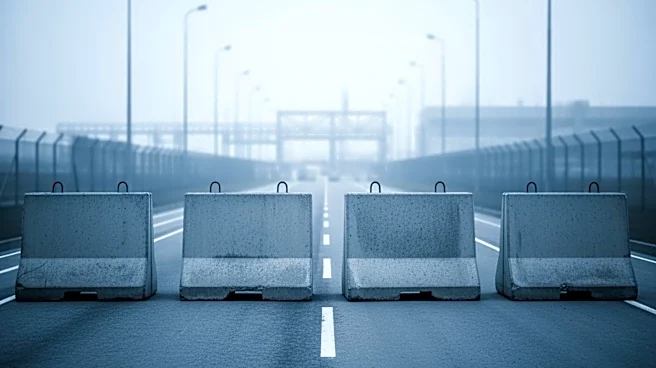
Security released a report based on high-resolution satellite imagery, which shows newly constructed makeshift roadblocks. These consist of earthen berms, piles of rubble, and fencing outside all three entrances to the facility. The roadblocks were established on or after March 18, as earlier satellite images did not show these obstructions. The entrances, which lead to a facility suspected of housing the majority of Iran's enriched uranium, have been filled and covered with dirt, with no apparent efforts to restore access. The road leading to the southernmost entrance is blocked by two roadblocks, and the center tunnel entrance is heavily fortified with dirt barricades. The primary road to the northernmost entrance is also blocked by a large pile of dirt.
Why It's Important?
The construction of these roadblocks at the Isfahan nuclear facility is significant as it highlights Iran's efforts to protect its nuclear assets amid international tensions. The move could complicate any potential ground invasion or seizure attempts by foreign entities, thereby increasing the complexity of accessing the facility. This development may further strain relations between Iran and countries concerned about its nuclear capabilities, particularly those advocating for non-proliferation. The roadblocks could also be seen as a defensive measure by Iran to safeguard its nuclear program, which it claims is for peaceful purposes. However, the international community, especially countries like the United States and Israel, may view this as a provocative action, potentially leading to increased diplomatic and military tensions in the region.
What's Next?
The installation of roadblocks at the Isfahan facility may prompt reactions from international stakeholders, including calls for increased inspections or diplomatic negotiations to address concerns over Iran's nuclear activities. Countries involved in the Joint Comprehensive Plan of Action (JCPOA) may seek to engage Iran in discussions to ensure compliance with nuclear agreements. Additionally, there could be increased surveillance and intelligence efforts by other nations to monitor Iran's nuclear developments. The situation may also lead to further sanctions or diplomatic measures aimed at curbing Iran's nuclear ambitions. The international community will likely continue to scrutinize Iran's actions closely, with potential implications for regional security and stability.