






What's Happening?
U.S. Senators John Hickenlooper (D-CO) and Dave McCormick (R-PA) have officially launched the U.S. Senate Bipartisan Science and Innovation Caucus. The caucus aims to highlight and elevate American scientific research and its application to promote innovation.
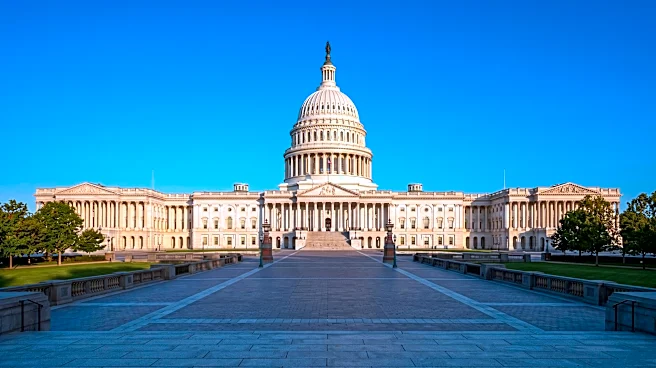
A kickoff event was held at the U.S. Capitol, bringing together scientists, researchers, and legislative staff. Senator Hickenlooper emphasized the importance of U.S. investments in science for economic growth and entrepreneurship, stating that the nation has historically led the world in scientific knowledge and economic expansion. Senator McCormick highlighted Pennsylvania's strong research and innovation ecosystem, noting its contribution to job creation, economic strengthening, and national security. The caucus plans to collaborate with industry leaders and the research community to develop policies that ensure U.S. leadership in science and technology. They will host briefings, roundtables, and discussions to foster new legislation aimed at boosting American scientific research and the STEM workforce.
Why It's Important?
The formation of the Bipartisan Science and Innovation Caucus is crucial for maintaining and advancing the United States' global leadership in science and technology. Historically, federally-funded research has been a cornerstone of American economic strength, leading to inventions like optical fibers, microchips, personal computers, and cutting-edge medicine. These fields currently account for 34% of the U.S. workforce and generate 39% of the U.S. GDP, totaling over $10 trillion. Despite these significant contributions, the U.S. spends only 3% of its GDP on research and development (R&D) and innovation. The caucus aims to address this by advocating for policies that increase investment, recognizing that every dollar invested in federally funded R&D generates nearly two dollars in economic output. This initiative is particularly vital as China is reportedly surpassing the U.S. in R&D funding, STEM PhD graduates, and international patent filings, narrowing the venture capital investment gap. By fostering bipartisan cooperation, the caucus seeks to ensure the U.S. remains competitive and continues to drive economic growth and national security through scientific advancement.
What's Next?
The Bipartisan Science and Innovation Caucus is set to host a series of activities designed to engage stakeholders and develop policy. These will include briefings, roundtables, and other discussions with industry leaders and the research community. The goal is to identify existing and new policies that can bolster American scientific research and expand the STEM workforce. Senators Hickenlooper and McCormick intend to provide a platform for discourse on new legislation aimed at boosting U.S. leadership in science and technology. The caucus's efforts will likely focus on increasing federal investment in R&D, promoting STEM education, and creating an environment conducive to innovation. Their work could lead to legislative proposals that aim to strengthen the U.S. position against international competitors, particularly China, in critical scientific and technological domains. The ongoing engagement with various sectors suggests a sustained effort to translate scientific breakthroughs into real-world applications and economic benefits.
Beyond the Headlines
The establishment of the Bipartisan Science and Innovation Caucus underscores a deeper recognition within Congress of the critical link between scientific advancement, economic prosperity, and national security. Beyond the immediate policy goals, this initiative highlights a potential shift towards greater bipartisan collaboration on issues deemed vital for long-term national interest, transcending typical political divides. The emphasis on maintaining U.S. leadership in science and technology in the face of growing international competition, particularly from China, points to a strategic imperative that extends beyond economic metrics to encompass geopolitical influence and technological sovereignty. The caucus's focus on the STEM workforce also touches upon broader societal implications, including educational reform and equitable access to high-paying jobs in advanced sectors. This effort could foster a renewed national commitment to scientific literacy and innovation, potentially inspiring future generations to pursue careers in science and engineering, thereby reinforcing the nation's intellectual capital and innovative capacity for decades to come.