

What's Happening?
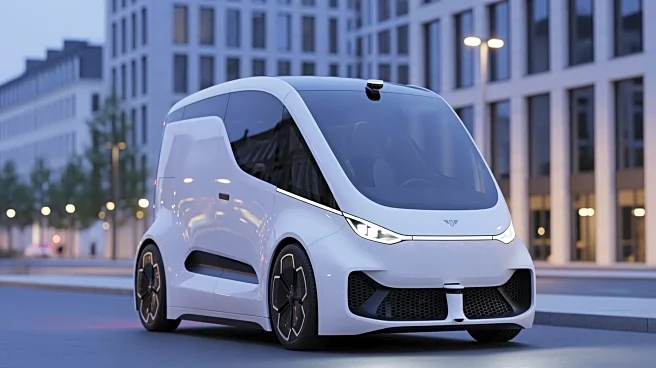
Neolix, a company specializing in autonomous delivery vehicles, has entered into a strategic partnership with Luxmea, a European provider of electric cargo and mobility solutions. This collaboration aims to develop autonomous delivery services specifically
for urban logistics in Europe, focusing on last-mile delivery scenarios. Neolix has already deployed its autonomous vehicles in 15 countries, achieving over 15,000 cumulative deliveries. Luxmea, under the Bodo Vehicle Industry brand, has a significant presence in Europe with over 550,000 electric bikes serving logistics clients. Neolix's products are certified by TÜV Rheinland and comply with more than 20 ECE and EU regulations. The partnership is seen as a strategic move to enhance smart logistics in Europe, leveraging AI technology and autonomous vehicle products to improve efficiency and convenience in logistics.
Why It's Important?
The partnership between Neolix and Luxmea is significant as it addresses the growing demand for efficient and sustainable logistics solutions in Europe. By focusing on last-mile delivery, the collaboration aims to tackle one of the most challenging aspects of logistics, which is crucial for reducing costs and improving delivery times. The integration of autonomous vehicles in urban logistics could lead to a reduction in traffic congestion and emissions, aligning with Europe's environmental goals. This partnership also highlights the increasing role of AI and autonomous technology in transforming traditional logistics models, potentially setting a precedent for future innovations in the industry.
What's Next?
As Neolix and Luxmea move forward with their partnership, they are likely to focus on expanding their operational footprint across Europe. This may involve further deployment of autonomous vehicles in new markets and the development of additional AI-driven logistics solutions. The collaboration could also prompt other companies in the logistics sector to explore similar partnerships or technological advancements to remain competitive. Regulatory developments in Europe regarding autonomous vehicles will also play a crucial role in shaping the future of this partnership, as compliance with local laws and standards will be essential for successful implementation.