






What's Happening?
Fairbanks Morse Defense (FMD) is in discussions with the U.S. Navy to conduct repairs on the three Seawolf-class submarines, signaling an expansion of the company's submarine maintenance operations. This development follows an approximately $100 million
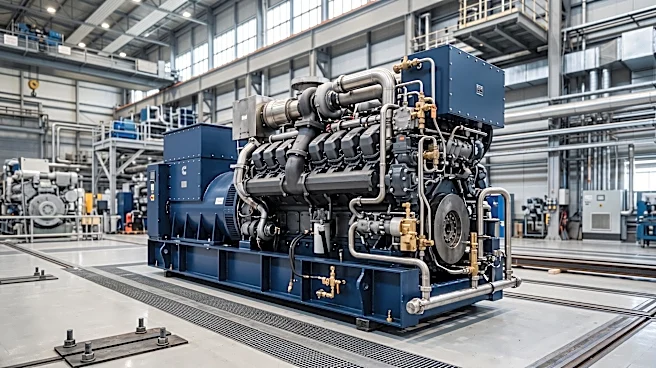
contract awarded to FMD by the U.S. Naval Sea Systems Command in October. This contract focuses on overhauling Emergency Diesel Generators (EDGs) for six aging Los Angeles- and Ohio-class submarines, aiming to extend their service lives by up to 14 years. FMD CEO George Whittier anticipates that work on the Seawolf-class vessels will commence after the completion of the Los Angeles- and Ohio-class overhauls, which are projected to conclude in the late 2020s. The company has also been expanding its Bird-Johnson Propeller Company facility in Pascagoula, Mississippi, with a $27 million investment from the Navy, largely funded by Australia's contribution to the U.S. Submarine Industrial Base under the AUKUS Pillar I agreement. This expansion aims to double naval propulsion system capacity.
Why It's Important?
The ongoing efforts by Fairbanks Morse Defense to repair and extend the life of U.S. Navy submarines are crucial for national security and naval readiness. Submarine maintenance delays have been a persistent challenge for the Navy, with a Government Accountability Office report in August indicating that only 11% of submarine maintenance periods were completed on schedule. The new contracts and planned repairs address the potential for a 'post-2029 submarine deficit,' which could arise from delays in the construction of Columbia-class and Virginia-class submarines and the decommissioning of older vessels. By extending the operational lifespan of existing submarines, the U.S. can mitigate this risk and maintain its undersea warfare capabilities. Furthermore, the investment in submarine capabilities reflects a broader strategic response to the expanding and modernizing fleets of competitors like Russia and China, underscoring the importance of a robust and ready submarine force for the United States and its allies.
What's Next?
Fairbanks Morse Defense expects to begin maintenance work on the Seawolf-class submarines after the current overhauls of Los Angeles- and Ohio-class submarines are completed in the late 2020s. The company is also looking to accelerate its 'Pit Stop' maintenance program, inspired by NASCAR, which utilizes pre-staged OEM parts and robotic welding to reduce repair timelines. FMD plans to conduct 10 such 'Pit Stops' for surface ships in 2027, building on the approximately 10 completed over the past five years. The expansion of the Bird-Johnson Propeller Company facility is also underway, aiming to double naval propulsion system capacity. These initiatives indicate a continued focus on enhancing the efficiency and speed of naval maintenance and repair operations, which will be critical for ensuring the operational readiness of the U.S. Navy's fleet in the coming years.
Beyond the Headlines
The increased investment in submarine maintenance and industrial base expansion highlights a critical strategic shift towards sustaining and enhancing existing naval assets while new construction faces potential delays. This approach not only addresses immediate readiness concerns but also strengthens the domestic defense industrial base, creating jobs and fostering technological advancements in naval engineering. The funding from Australia as part of the AUKUS agreement underscores the growing importance of international partnerships in bolstering collective defense capabilities and sharing the burden of maintaining a robust naval presence. This collaborative effort could set a precedent for future defense industrial cooperation, ensuring that allied nations can collectively counter emerging threats and maintain maritime security in an increasingly complex geopolitical landscape. The focus on rapid maintenance techniques, like the 'Pit Stop' program, also signifies an innovative approach to defense logistics, potentially revolutionizing how naval assets are serviced and returned to operational status.