

What's Happening?
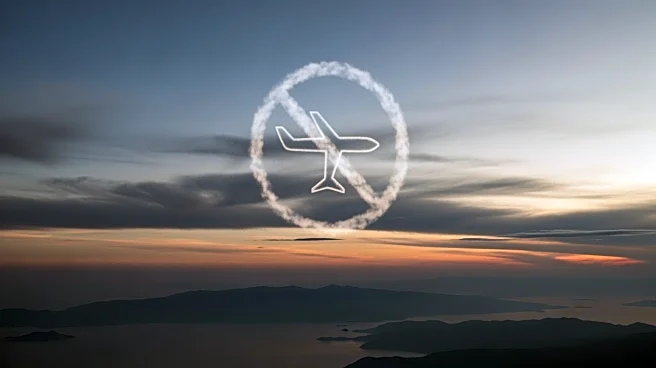
Spain has announced the closure of its airspace to U.S. military planes involved in operations against Iran. This decision, confirmed by Defense Minister Margarita Robles, extends Spain's previous refusal to allow the use of its military bases for the conflict.
The move is part of Spain's stance against participating in what it views as an illegal war initiated by the U.S. and Israel. The closure requires U.S. military aircraft to reroute around Spanish airspace, although exceptions are made for emergencies. The decision reflects Spain's broader opposition to the conflict, as articulated by Prime Minister Pedro Sanchez.
Why It's Important?
Spain's decision to close its airspace to U.S. military operations marks a significant diplomatic rift between the two NATO allies. This action could strain U.S.-Spain relations, particularly in defense and trade. President Trump has already threatened to cut trade ties with Spain in response. The closure also complicates U.S. military logistics in the region, potentially affecting the efficiency and cost of operations. Spain's stance highlights the broader international opposition to the U.S.-led military actions in Iran, raising questions about the legality and support for the conflict.
What's Next?
The closure of Spanish airspace may prompt the U.S. to seek alternative routes and bases for its military operations, potentially involving other NATO allies. Diplomatic negotiations may ensue to address the tensions and explore possible resolutions. The situation could also influence other European countries' positions on the conflict, potentially leading to a broader reevaluation of alliances and military cooperation within NATO. The ongoing conflict and its international ramifications will likely remain a focal point in global diplomatic discussions.