





What's Happening?
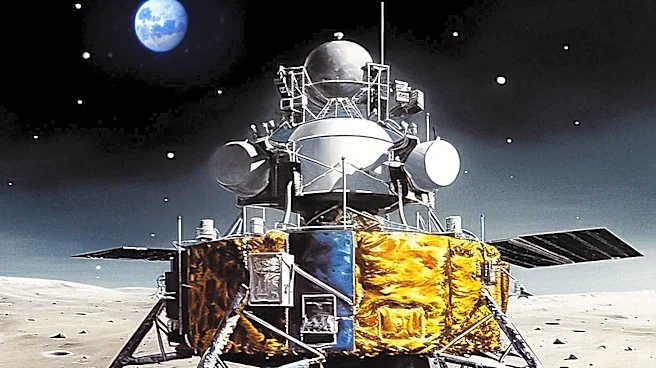
Firefly Aerospace is planning a Lunar Blue Ghost lander mission, slated for as early as 2028, which will feature a nuclear-powered heater built by Zeno Power Systems. This heater, powered by americium-241, is designed to demonstrate radioisotope capabilities
in the extreme temperatures of the lunar environment. The primary goal is to enable the lander to survive the lunar night, which lasts approximately 14 Earth days. This mission is a key component of Firefly’s broader efforts to support long-duration surface operations, which are essential for NASA’s Moon Base initiative and the burgeoning lunar economy. Zeno Power Systems has completed the final design review for its Harmonia system, reporting that it delivered 3.5 times the originally specified power in its design performance. The company is now moving into fabrication, with terrestrial demonstrations and eventual lunar qualification planned.
Why It's Important?
This mission represents a significant step forward in developing sustainable lunar operations, directly addressing one of the most challenging aspects of lunar exploration: surviving the prolonged and extremely cold lunar night. The ability to maintain equipment functionality through these extended periods of darkness is crucial for establishing a permanent human presence and for the long-term viability of a lunar economy. By demonstrating radioisotope power capabilities, the mission could unlock new possibilities for scientific research, resource extraction, and infrastructure development on the Moon. This technology could reduce reliance on solar power, which is ineffective during lunar nights, and enable continuous operations, thereby accelerating the pace of lunar development and potentially attracting further investment in the space sector. The success of such a mission would also bolster the U.S.'s leadership in space exploration and technology.
What's Next?
Following the completion of fabrication, Zeno Power Systems will proceed with terrestrial demonstrations of its nuclear-powered heater, followed by lunar qualification. The Firefly Aerospace Blue Ghost mission is targeted for launch as early as 2028. Success in this mission will likely lead to further integration of radioisotope power systems into future lunar landers and surface assets, potentially becoming a standard for long-duration lunar missions. This could also pave the way for more ambitious lunar endeavors, including the establishment of permanent lunar outposts and advanced resource utilization projects. The mission's outcome will be closely watched by NASA and other space agencies, as it could influence future strategies for lunar exploration and the development of a robust lunar economy.
Beyond the Headlines
The deployment of nuclear-powered technology on the Moon raises broader discussions about the use of radioisotopes in space and the associated safety protocols. While americium-241 offers a reliable power source for extreme environments, its use necessitates stringent safety measures for launch, transit, and lunar deployment to prevent any potential environmental contamination. This mission also highlights the growing trend of private companies, like Firefly Aerospace and Zeno Power Systems, playing increasingly critical roles in national space initiatives, often in partnership with government agencies like NASA. This collaboration fosters innovation and accelerates technological development, but also brings new complexities regarding regulatory oversight and commercial interests in space. The long-term implications include the potential for a more self-sufficient lunar presence, reducing dependence on Earth-based resources and enabling a new era of deep space exploration.