





What's Happening?
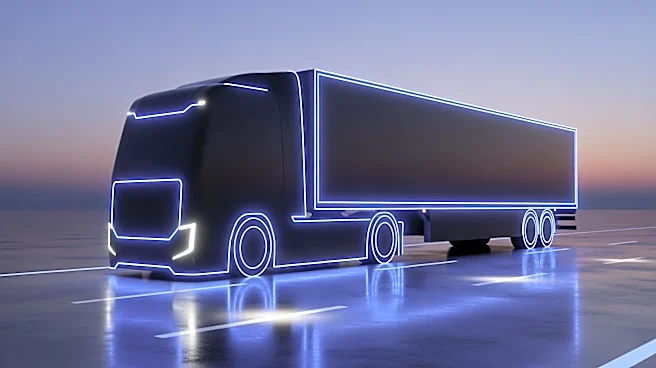
Chinese autonomous trucking companies have stated that recent advancements in artificial intelligence, particularly in large language models, are not accelerating the deployment of self-driving vehicles. Despite frequent AI updates, these improvements
do not directly impact the timeline for autonomous vehicle rollout. Pony.ai CEO James Peng emphasized the distinction between AI used for language processing and that required for driving, noting the different skills involved. Inceptio, a self-driving truck startup, remains committed to its mid-2028 commercialization timeline, aiming to accumulate 5 billion kilometers of driving data in China by then. This data is crucial for developing fully autonomous heavy-duty trucks capable of operating on public roads.
Why It's Important?
The cautious approach by Chinese self-driving truck companies underscores the complexity of integrating AI into autonomous driving technology. While AI advancements are significant, the specific requirements for self-driving vehicles involve extensive real-world data and specialized algorithms. This highlights the challenges in achieving full autonomy in transportation, which has implications for global logistics and supply chain efficiency. The development of autonomous trucks could revolutionize the industry, reducing labor costs and increasing safety. However, the slow rollout indicates that significant hurdles remain, affecting the pace at which these benefits can be realized.