







What's Happening?
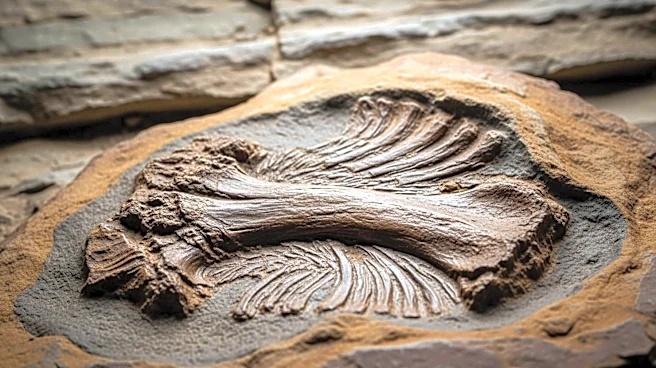
Paleontologists have unearthed the most complete dinosaur skeleton ever found in Scotland, dating back 166 million years. The fossil, discovered on the Isle of Skye, represents a dog-sized herbivorous dinosaur from the Middle Jurassic period. This discovery
is significant due to the rarity of fossils from this era, which have typically been limited to incomplete teeth or limb fragments. The fossil is believed to belong to the ornithischian group, a clade of plant-eating dinosaurs. The excavation, led by Dr. Elsa Panciroli from National Museums Scotland, was challenging due to the fossil's location in a remote area accessible only at low tide. The find provides crucial insights into the evolution of herbivorous dinosaurs during a transitional period in prehistory.
Why It's Important?
This discovery fills a critical gap in the understanding of Middle Jurassic ecosystems, a period often overshadowed by the Late Jurassic. The fossil's completeness allows scientists to better map the evolutionary paths of dinosaur groups, particularly herbivores. The find could potentially rewrite key chapters of dinosaur evolution, highlighting the diversification of plant-eating species. The research underscores the importance of Middle Jurassic fossils, which have been scarce resources for scientists. This discovery not only enhances scientific knowledge but also emphasizes the significance of preserving and studying such rare fossils.