
What's Happening?
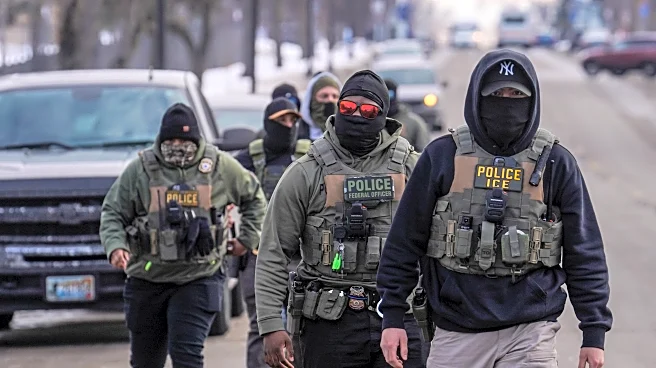
A U.S. District Judge, Katherine Menendez, has issued an order restricting federal agents from interfering with peaceful protests in Minnesota. This decision comes after President Trump indicated there was no immediate need to invoke the Insurrection
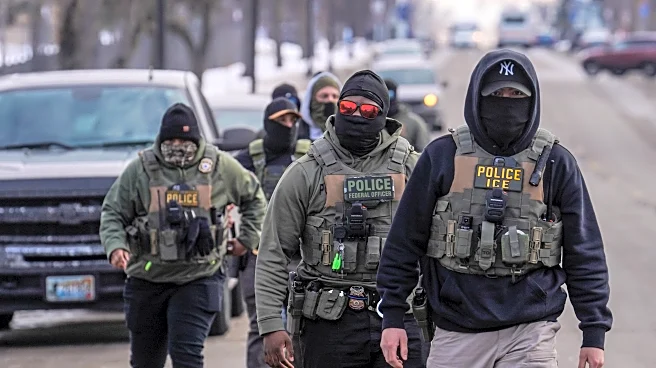
Act amidst ongoing demonstrations. The judge's 83-page order mandates that immigration agents cease aggressive tactics, such as detaining peaceful protesters and using pepper spray. The Department of Homeland Security has been given 72 hours to comply. This legal action follows incidents where federal agents opened fire, resulting in one death and one injury. Concurrently, the Justice Department is investigating Minnesota Governor Tim Walz and Minneapolis Mayor Jacob Frey for allegedly obstructing federal officers. Both officials have advocated for peaceful protests against immigration enforcement actions in the state.
Why It's Important?
The judge's ruling is significant as it addresses the balance between federal authority and the rights of citizens to protest peacefully. The decision could impact how federal agencies engage with demonstrators, potentially setting a precedent for future interactions. The investigation into state officials by the Justice Department highlights tensions between federal and state authorities, particularly concerning immigration enforcement. This situation underscores the broader national debate over immigration policies and the use of federal power in local jurisdictions. The outcome of these legal and political maneuvers could influence public policy and civil liberties, affecting how protests are managed across the U.S.
What's Next?
The Department of Homeland Security must adjust its operations in Minnesota to comply with the court order. The ongoing investigation by the Justice Department into state officials may lead to further legal challenges or political repercussions. As tensions remain high, both federal and state authorities will need to navigate the complex dynamics of enforcing immigration laws while respecting citizens' rights to protest. The situation may prompt legislative or executive actions to clarify the roles and limits of federal and state powers in managing civil unrest.