






What's Happening?
The United States is experiencing a multi-decade "maritime industrial super cycle," characterized by a significant return of private capital to the maritime industrial base. This trend is driven by the nation's strategic need to rapidly build, sustain,
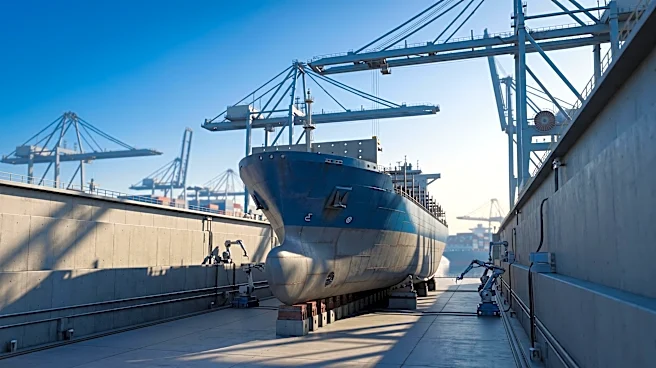
repair, and scale its maritime capabilities through a resilient and technologically advanced industrial base. An industry report by the Aerospace, Defense & Government Services (ADGS) investment banking team at Brown Gibbons Lang & Company (BGL) highlights emerging opportunities for private equity and infrastructure investors in the maritime defense sector. This influx of capital is targeting various segments, including the consolidation of fragmented suppliers, investment in long-duration assets like shipyards and dry docks, and funding for autonomous systems, advanced manufacturing, and maritime software.
Why It's Important?
The resurgence of private capital in the U.S. maritime industrial base is crucial for national security and economic stability. A robust maritime industrial base is essential for maintaining naval superiority, supporting global trade, and responding to geopolitical challenges. The report emphasizes that enduring strategic advantage will depend not only on advanced naval platforms but also on the nation's capacity to industrialize and innovate within this sector. This investment addresses critical needs such as fleet readiness, which creates recurring demand for aftermarket services, and accelerates consolidation across the naval defense sector, potentially leading to more efficient and capable operations. The involvement of private equity and infrastructure investors can provide the patient capital and operational expertise needed to modernize and expand this vital industry.
What's Next?
The trend of private capital investment is expected to continue, driven by durable government demand, large prime-contractor backlogs, and a bipartisan recognition of the need to expand maritime capacity. Companies that can combine differentiated technology with operational industrialization capabilities are best positioned to create value. Regulatory enforcement and evolving policy priorities will also shape the market, attracting further investor interest to a sector that has historically seen limited institutional investment. The ongoing market fragmentation, with thousands of suppliers for a single ship class, presents opportunities for scaled platforms that can improve coordination, broaden capabilities, and invest in modern systems, ultimately strengthening the overall U.S. maritime industrial base.
Beyond the Headlines
The return of private capital to the maritime industrial base signifies a broader shift in how critical national infrastructure is funded and developed. Beyond the immediate economic and defense implications, this trend highlights a growing recognition of the interconnectedness between national security and private sector innovation. It also raises questions about the balance between private profit motives and public interest, particularly in a sector as strategically vital as maritime defense. The long-term success of this super cycle will depend on effective collaboration between government, industry, and investors to ensure that investments translate into sustainable growth, technological advancement, and a resilient industrial base capable of meeting future challenges. This also underscores the importance of skilled labor development and supply chain integrity within the U.S. to support this renewed industrial focus.