






What's Happening?
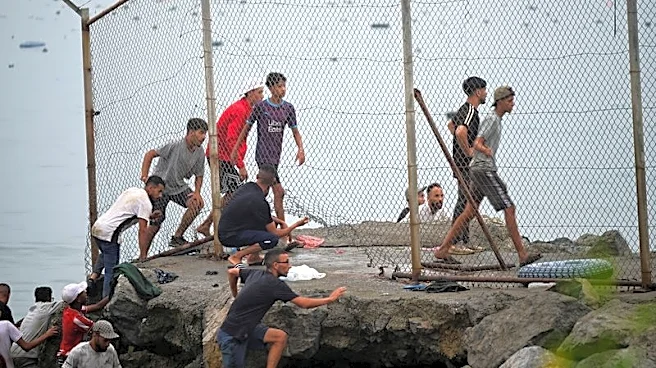
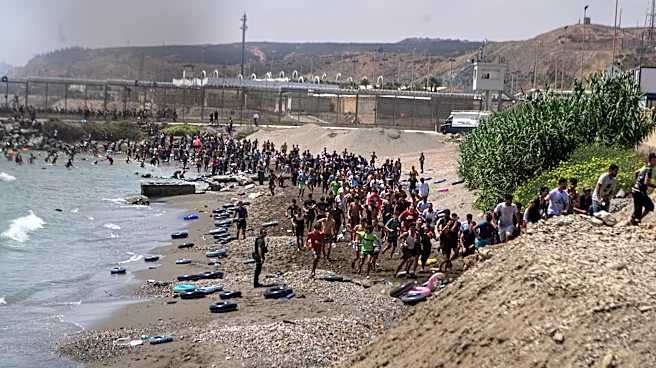
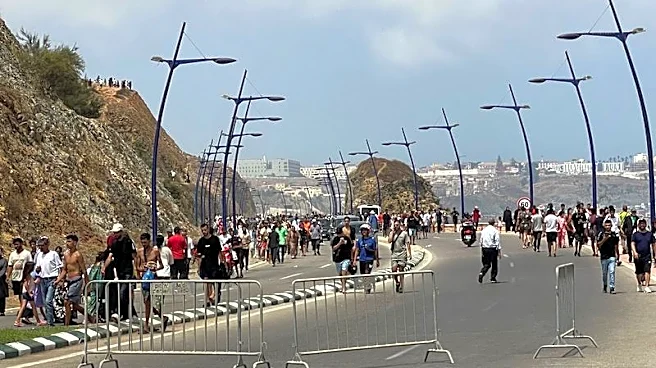
The European Union has convened an emergency meeting following a significant influx of migrants into Spain's North African territory of Ceuta. Over a few days, approximately 60,000 migrants entered the enclave, overwhelming local resources and prompting
a call for coordinated action among EU member states. The situation has largely stabilized, with most migrants reportedly returned to Morocco. The surge has been attributed to various factors, including potential diplomatic tensions and interpretations of recent Spanish court rulings. The EU's response includes discussions on strengthening external borders and addressing the root causes of such mass migrations.
Why It's Important?
This development highlights ongoing challenges in managing migration within the EU, particularly in territories like Ceuta that serve as entry points for asylum seekers. The situation underscores the need for a unified EU approach to border security and migration policy. It also raises questions about the role of external actors, such as Morocco, in influencing migration flows. The incident could impact EU relations with neighboring countries and influence internal EU politics, especially regarding the balance between humanitarian obligations and border security.
What's Next?
The EU's emergency meeting aims to address immediate security concerns and develop long-term strategies for managing similar situations. Potential outcomes include increased powers for the European border agency, Frontex, and enhanced cooperation among member states. The situation may also prompt discussions on revising migration policies and strengthening diplomatic ties with countries like Morocco to prevent future crises. The EU's response will be closely watched by international observers and could influence migration policies globally.
Beyond the Headlines
The incident in Ceuta may have broader implications for EU-Morocco relations, as well as for the EU's internal cohesion on migration issues. It highlights the complex interplay between migration, diplomacy, and security, and may lead to increased scrutiny of the EU's external border policies. The situation also raises ethical questions about the treatment of migrants and the responsibilities of EU member states in upholding human rights standards.