
What's Happening?
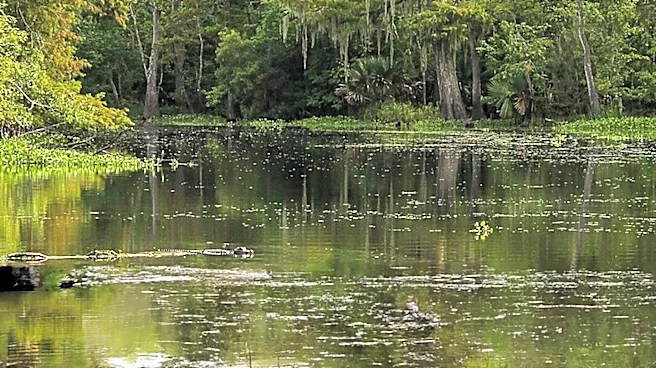
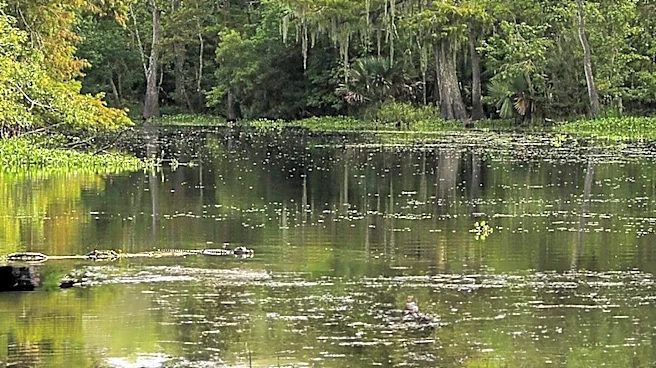
The Okefenokee Swamp, located in the southeastern United States, has been designated as a UNESCO World Heritage Site. This recognition highlights the swamp's exceptional biodiversity and its role as a critical
carbon sink. Spanning 1,646 square kilometers across Georgia and Florida, the Okefenokee Swamp is home to a diverse array of species, including 856 plants, 238 birds, 90 reptiles and amphibians, 48 mammals, and 39 fish. The swamp's unique ecosystem provides a refuge for migratory birds and several threatened species, such as the longleaf pine tree, gopher frog, and eastern indigo snake.
Why It's Important?
The designation of the Okefenokee Swamp as a UNESCO World Heritage Site underscores the global importance of preserving natural habitats that support biodiversity and ecological balance. This recognition can enhance conservation efforts and attract international attention and resources to protect the swamp's unique ecosystem. The swamp's role as a carbon sink also highlights its contribution to mitigating climate change, emphasizing the need for sustainable management practices to preserve its ecological functions.
What's Next?
The UNESCO designation is likely to boost conservation initiatives and funding for the Okefenokee Swamp. It may also increase tourism, providing economic benefits to the surrounding communities. However, increased human activity could pose challenges to the swamp's delicate ecosystem, necessitating careful management to balance conservation and tourism. Ongoing research and monitoring will be essential to ensure the swamp's biodiversity is preserved for future generations.