







What's Happening?
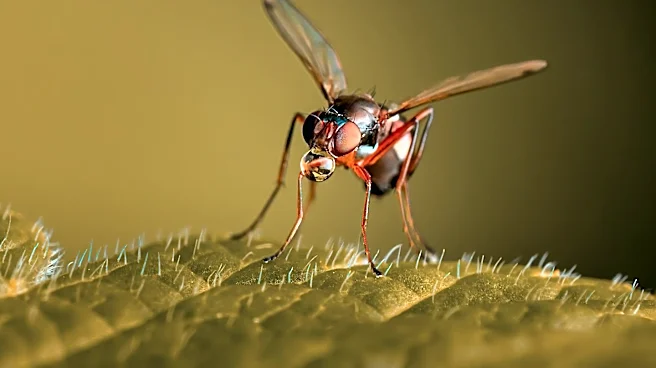
In the 1950s, scientist Edward Knipling initiated a highly successful campaign to combat the New World screwworm, a parasitic insect that inflicted severe damage on livestock and wildlife across the Americas. Knipling's innovative approach, known as the sterile
insect technique, involved breeding and releasing millions of sterile male screwworm flies. The objective was to prevent the insects from reproducing, thereby reducing their population. This method proved to be a transformative development in pest control, as detailed in archive recordings from the Special Collections of the United States Department of Agriculture's National Agricultural Library. The BBC World Service podcast 'Witness History' highlighted this significant historical effort, showcasing how Knipling's bold idea led to one of the most effective eradication campaigns in history.
Why It's Important?
The eradication of the New World screwworm had profound economic and agricultural implications for the U.S. and the wider Americas. Before Knipling's intervention, the screwworm caused devastating injuries to livestock, leading to significant financial losses for farmers and ranchers. The sterile insect technique not only protected animal welfare but also safeguarded the agricultural economy by preventing widespread infestations. This success demonstrated the power of scientific innovation in addressing critical biological threats. The method's effectiveness established a precedent for future pest control strategies, influencing how agricultural and public health agencies approach similar challenges. The long-term impact includes enhanced food security and reduced reliance on chemical pesticides, benefiting both the environment and human health.
What's Next?
While the initial eradication campaign was highly successful, ongoing vigilance and potential future applications of the sterile insect technique remain relevant. The principles established by Knipling's work continue to inform modern pest management strategies, particularly in preventing the re-establishment of eradicated pests or controlling new invasive species. Research into refining and adapting this technique for other agricultural pests or disease vectors is likely to continue. Furthermore, the historical success of the screwworm eradication program serves as a model for international cooperation in addressing transboundary biological threats, suggesting that similar collaborative efforts could be pursued for other pests that impact multiple nations.
Beyond the Headlines
The screwworm eradication program represents a significant ethical and scientific milestone. It showcased a method of pest control that is species-specific and environmentally friendly, avoiding the broad ecological impacts often associated with chemical pesticides. This approach highlights a shift towards more sustainable and targeted interventions in agriculture and public health. The story also underscores the critical role of government-funded research and collaboration between scientists and agricultural institutions in achieving large-scale public good. Knipling's legacy extends beyond pest control, influencing the development of integrated pest management strategies that prioritize ecological balance and long-term sustainability, demonstrating how scientific ingenuity can lead to profound societal benefits.