






What's Happening?
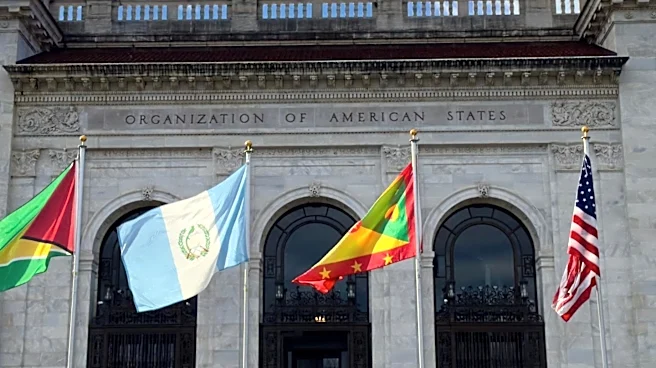
The Organization of American States (OAS) conducted its 9th Election Observation Mission in Grenada for the general election held on Thursday, November 5, 2026. The mission, led by Ambassador Sherry Tross, a former diplomat of St. Kitts and Nevis, monitored
various aspects of the electoral process, including voting procedures, and the counting and tabulation of ballots. This observation is part of the OAS's long-standing commitment to monitoring elections in Grenada, which began in 1984. Ahead of polling day, OAS observers engaged with electoral authorities, political parties, candidates, and other stakeholders. The election resulted in the National Democratic Congress (NDC), led by Dickon Mitchell, securing a second consecutive term in government by winning 14 out of Grenada's 15 constituencies. The New National Party (NNP) retained one seat. Preliminary results indicated a 63.3% voter turnout.
Why It's Important?
The OAS's observation of Grenada's general election is crucial for upholding democratic principles and ensuring electoral integrity in the Western Hemisphere. For the U.S., the stability and democratic health of its Caribbean neighbors are vital for regional security and economic partnerships. The presence of international observers like the OAS lends credibility to the electoral process, reducing the likelihood of disputes and fostering public trust in election outcomes. This contributes to political stability, which is essential for attracting foreign investment and maintaining consistent diplomatic relations. The OAS's long-term engagement in Grenadian elections, dating back to 1984, underscores a sustained commitment to democratic governance, aligning with broader U.S. interests in promoting democracy and human rights globally. The findings and recommendations from the OAS mission will provide valuable insights into potential areas for electoral reform, further strengthening democratic institutions in the region.
What's Next?
Both the OAS and the Caribbean Community (Caricom), which also observed the election, are expected to release their assessments of the elections. These assessments will outline their findings and recommendations for improving future electoral processes. Caricom was scheduled to present its initial observations at a media briefing on Friday, November 6, at 4 p.m. The NDC, having secured a second term, will continue its governance, with the NNP forming the opposition. The recommendations from the observation missions could lead to legislative or procedural changes in Grenada's electoral system, aiming to enhance transparency, efficiency, and fairness. The ongoing engagement of international bodies like the OAS will likely continue to play a role in supporting democratic development in Grenada and other member states.
Beyond the Headlines
The consistent involvement of the OAS in observing elections across its member states, as exemplified by its long-standing presence in Grenada, highlights a fundamental aspect of regional governance and international cooperation. Beyond merely validating election results, these missions serve as a critical mechanism for institutional learning and democratic evolution. They provide an external, impartial perspective that can identify systemic weaknesses, suggest best practices, and encourage adherence to international electoral standards. This sustained engagement fosters a culture of accountability among political actors and electoral bodies. For the U.S., supporting such OAS initiatives is a strategic investment in regional stability, as robust democratic processes are less prone to internal conflict and external interference. The detailed recommendations from these missions often lead to incremental but significant reforms that strengthen the rule of law and democratic institutions over the long term, contributing to a more secure and prosperous hemisphere.