







What's Happening?
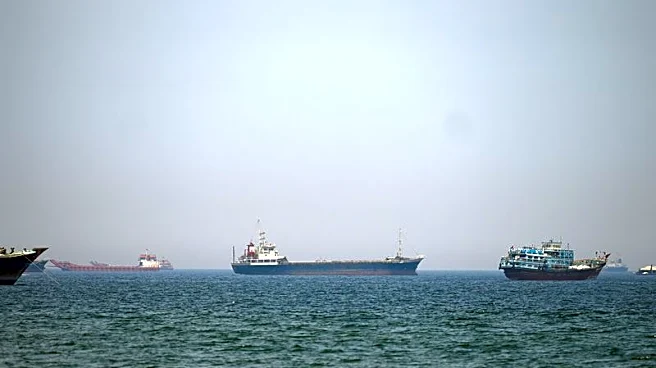
President Trump has issued a threat to Iran via a post on Truth Social, claiming that Iran is in a 'State of Collapse' and is requesting the reopening of the Strait of Hormuz. This comes as tensions remain high with the strait blockaded, affecting global
oil prices. Iranian officials, including President Masoud Pezeshkian, have responded with strong rhetoric, emphasizing national unity and resistance. The blockade has led to a rise in oil prices, with Brent Crude Futures increasing to $114.42 per barrel, and U.S. gas prices reaching their highest levels in over three years.
Why It's Important?
The blockade of the Strait of Hormuz, a critical chokepoint for global oil shipments, has significant implications for international energy markets. The rise in oil prices affects not only the cost of fuel but also has broader economic impacts, potentially leading to increased inflation and affecting consumer spending. The geopolitical tensions between the U.S. and Iran could further destabilize the region, impacting global trade and security. Stakeholders in the energy sector, as well as policymakers, are closely monitoring the situation for potential disruptions.
What's Next?
The ongoing blockade and rising tensions suggest that diplomatic efforts may be necessary to de-escalate the situation. The international community, including major oil-importing countries, may seek to mediate or apply pressure to ensure the free flow of oil through the Strait of Hormuz. The U.S. administration's next steps could involve further diplomatic or economic measures against Iran, while Iran may continue to assert its position through regional alliances and military posturing.