







What's Happening?
Timmy, a humpback whale calf, was released into the North Sea after being stranded near Germany's Baltic Sea coast. The whale had been stuck in shallow waters since March, leading to health deterioration and public concern. A private initiative, supported
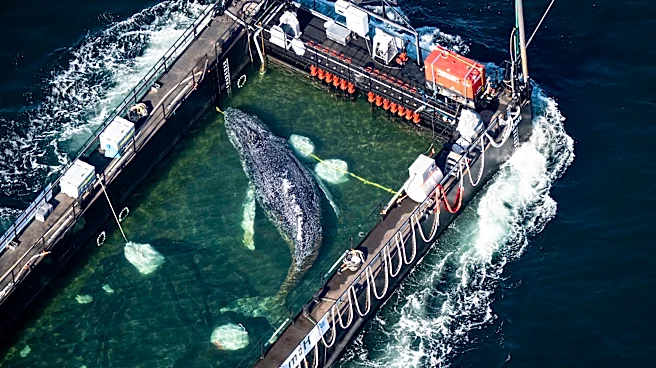
by Germany's Mecklenburg-Western Pomerania state, transported Timmy using a water-filled barge to deeper waters off Denmark. The operation faced debate over the ethical implications of intervening in natural processes. Despite initial skepticism, the rescue was completed, and Timmy was released with a GPS transmitter to track its journey.
Why It's Important?
The release of Timmy highlights the challenges of marine wildlife conservation and the ethical dilemmas involved in human intervention. The case attracted significant media attention, reflecting public interest in animal welfare and conservation. The operation demonstrates the potential of collaborative efforts between private initiatives and government bodies in addressing environmental issues. The use of technology, such as GPS tracking, provides valuable insights into the behavior and health of marine animals post-rescue, contributing to future conservation strategies.
What's Next?
With Timmy now in the North Sea, researchers will monitor its movements using the attached GPS transmitter. This tracking will provide data on the whale's health and migration patterns, offering insights into the impacts of environmental changes on marine life. The case may influence future policies on wildlife rescue operations and highlight the importance of technological advancements in conservation efforts. Ongoing public interest could drive further support for marine conservation initiatives and raise awareness about the challenges faced by marine animals.