








What's Happening?
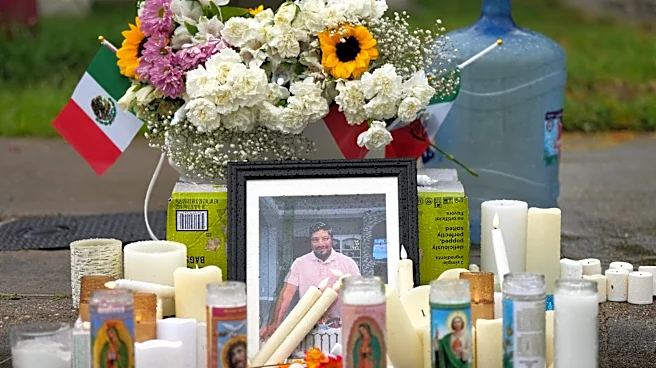
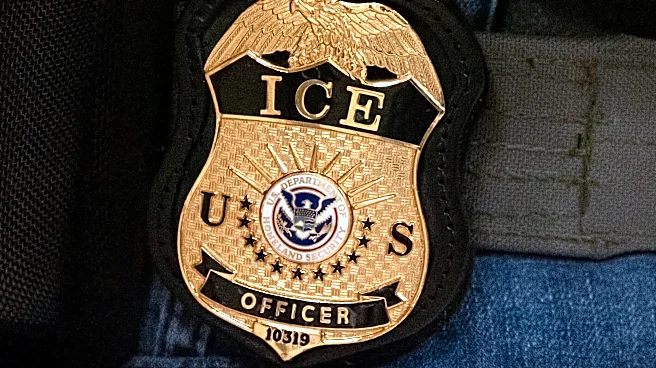
The U.S. Immigration and Customs Enforcement (ICE) agency will now require its officers to wear body cameras during vehicle stops. This decision follows multiple fatal shootings involving ICE officers, which have sparked public outcry and protests in various
cities, including Maine, Houston, and Boston. The Trump administration's border czar, Tom Homan, announced the policy change, emphasizing that body cameras often exonerate law enforcement officers. The move comes after two recent incidents where ICE officers fatally shot individuals during traffic stops, leading to increased scrutiny over the agency's tactics. Previously, a body-camera pilot program was launched in 2024, but its expansion was delayed due to funding cuts proposed by the Trump administration.
Why It's Important?
The implementation of body cameras for ICE agents is significant as it addresses public concerns about accountability and transparency in law enforcement. The decision aims to rebuild trust between ICE and the communities it serves, particularly in light of recent fatal incidents. Body cameras are seen as a tool to provide objective evidence in contentious situations, potentially reducing the number of disputes over officer conduct. This policy change could influence broader law enforcement practices across the U.S., as other agencies may adopt similar measures to enhance transparency and accountability.
What's Next?
As ICE rolls out the body camera program nationwide, training for officers on the use of this technology will be crucial. The agency will need to ensure that all officers are equipped and trained to use the cameras effectively. Additionally, the public and advocacy groups will likely monitor the implementation closely to assess its impact on reducing incidents of violence and improving accountability. The response from communities affected by ICE operations will be a key indicator of the program's success in restoring trust.