






What's Happening?
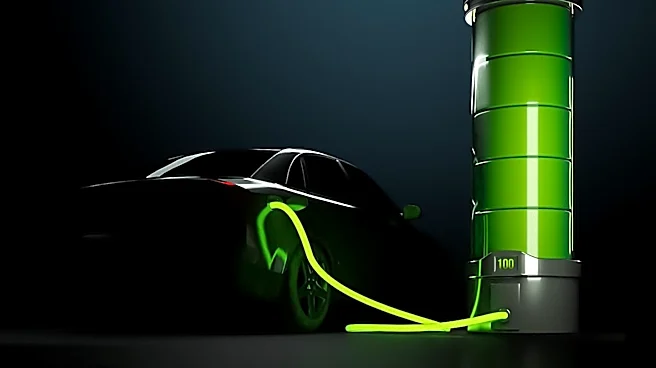
The World Economic Forum (WEF) has identified the 'everything-to-grid' concept as a top emerging technology for 2026. This approach envisions turning every building, vehicle, and factory into a power source, which can store and return power to the grid,
thereby balancing supply and demand in real-time. The WEF report emphasizes the potential of new battery chemistries that move away from cobalt and nickel, using more abundant materials like lithium and sodium. This shift is expected to enhance grid-scale storage capabilities. The report also highlights the evolution of hardware and software that facilitates the integration of distributed storage into a cohesive system, allowing for active grid stabilization. The WEF suggests that this technology could significantly alter energy planning, making it a shared responsibility among businesses, governments, and utilities.
Why It's Important?
The 'everything-to-grid' technology could revolutionize the energy sector by decentralizing power generation and storage. This shift could lead to more resilient and flexible energy systems, reducing reliance on traditional power plants and enhancing energy security. For businesses and governments, this means that decisions regarding infrastructure, such as buildings and fleets, will increasingly impact energy costs and resilience. The technology also poses challenges, such as the need for new regulatory frameworks and the potential for cybersecurity risks as power networks become more interconnected. The successful implementation of this technology could lead to significant economic and environmental benefits, including reduced carbon emissions and increased energy efficiency.
What's Next?
The WEF report outlines several recommendations for scaling the 'everything-to-grid' technology, including regulatory changes and the development of new business models. Utilities may need to transition from selling power to managing networks of distributed assets. The report also highlights the importance of coordination among stakeholders to ensure that the technology develops as a shared system of resilience rather than a fragmented race for control. As the technology matures, it will be crucial to address challenges such as battery degradation and uncertain revenue models to ensure widespread adoption.