



What's Happening?
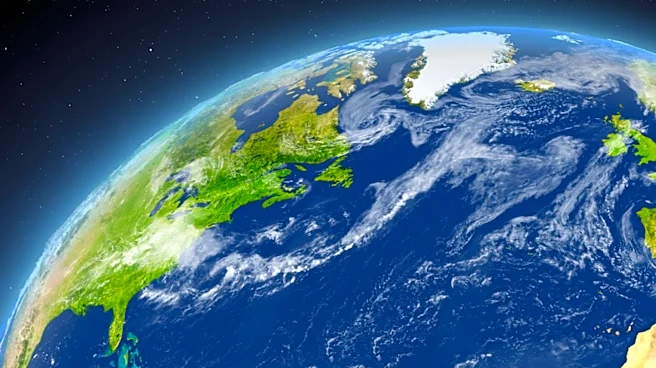
Each year, millions of tons of mineral dust from the Sahara Desert are carried across the Atlantic Ocean by winds, settling over the Amazon rainforest. This dust delivers essential nutrients, particularly phosphorus, which helps sustain the Amazon's vegetation.
A 2015 NASA satellite study estimated that an average of 27.7 million tons of Saharan dust, containing approximately 22,000 tons of phosphorus, settled over the Amazon Basin annually between 2007 and 2013. This amount of phosphorus is broadly comparable to what the rainforest loses through rainfall and river runoff. The Amazon's soils are often old and nutrient-poor, making this external nutrient supply crucial for maintaining its productivity, as phosphorus is vital for plant growth and cellular functions.
Why It's Important?
This intercontinental dust transport reveals a profound ecological connection between two seemingly disparate environments: a vast desert and a dense rainforest. It challenges the notion that major ecosystems function independently, demonstrating how geological history, climate, and living systems are linked across continents and oceans. The continuous replenishment of phosphorus from the Sahara helps compensate for nutrient losses in the Amazon, supporting its extraordinary biodiversity and role as a global climate regulator. Without this natural fertilization, the Amazon's long-term productivity could be significantly impacted, potentially affecting its ability to absorb carbon dioxide and maintain its complex ecosystem. This phenomenon underscores the intricate and often unseen global processes that sustain Earth's critical biomes.
What's Next?
Scientists continue to refine estimates of the amount of dust reaching the Amazon and the proportion of phosphorus that becomes available to plants. Research is ongoing to understand how climate change might alter this process. Changes in rainfall patterns over the Sahel and Sahara could affect the quantity of dust lifted into the atmosphere, while shifts in wind patterns and tropical precipitation could influence how much dust survives the transatlantic journey. Predicting the future of this natural phenomenon is complex due to the intricate interactions between dust emissions, precipitation, atmospheric chemistry, and ecosystem nutrient cycling. Further research will be crucial to understand the long-term implications for the Amazon's health and global environmental systems.
Beyond the Headlines
The Sahara-to-Amazon dust journey highlights the interconnectedness of Earth's systems on a planetary scale. It illustrates how seemingly isolated environmental changes in one region can have far-reaching consequences for ecosystems thousands of miles away. This natural process also offers a deeper understanding of nutrient cycling, revealing that while internal recycling is primary, external inputs can be critical for maintaining ecological balance in nutrient-limited environments. The ethical implication is that human activities impacting climate and land use in one part of the world could inadvertently disrupt vital natural processes in another, emphasizing the need for a holistic approach to environmental stewardship and climate policy. This natural wonder serves as a powerful reminder of the delicate balance of our planet's ecosystems.