





What's Happening?
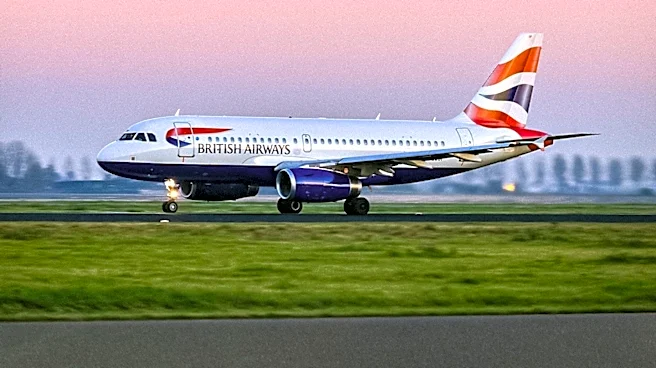
British Airways flight BA756, en route from London Heathrow to Geneva, was forced to divert to Paris Charles de Gaulle Airport (CDG) on Thursday night. The diversion occurred due to severe visibility issues caused by torrential downpours and widespread
heavy rainstorms across Geneva and the broader Swiss region. The Airbus A320, registration G-EUUD, departed London Heathrow and was approaching its destination when flight crews encountered the adverse weather conditions, making a safe landing impossible. After holding for several minutes and assessing weather reports that indicated no immediate improvement, the pilots made the decision to divert to Paris. The aircraft landed safely at Paris CDG at 11:25 PM local time, and passengers were provided assistance overnight.
Why It's Important?
This incident highlights the critical impact of adverse weather conditions on air travel and the stringent safety protocols followed by airlines. Diversions due to weather, while inconvenient for passengers, underscore the priority placed on safety in aviation. For the airline industry, such events can lead to significant operational disruptions, including schedule delays, increased fuel consumption, and additional costs for passenger accommodation and re-routing. For passengers, it means unexpected delays and changes to travel plans, which can have ripple effects on connecting flights, business meetings, and personal commitments. The decision-making process by flight crews in such situations is crucial, demonstrating the importance of real-time weather intelligence and pilot discretion in ensuring passenger safety, even if it means altering the planned itinerary.
What's Next?
Flight BA756 is scheduled to complete its journey from Paris Charles de Gaulle to Geneva today, Friday, departing CDG at 13:15 CEST. Passengers who were provided overnight assistance in Paris will proceed with this rescheduled flight. This situation will likely involve coordination between British Airways and airport authorities in both Paris and Geneva to manage the delayed flight and any potential knock-on effects on other services. Airlines typically have contingency plans for such diversions, including arranging alternative travel for passengers if the delay is prolonged or if they miss connecting flights. The incident may also prompt a review of weather forecasting and communication protocols for the affected routes to enhance preparedness for similar events in the future.
Beyond the Headlines
Beyond the immediate disruption, this event underscores the broader challenges faced by the aviation industry due to increasingly unpredictable weather patterns, potentially linked to climate change. Airlines and air traffic control systems are constantly evolving to manage these challenges, investing in advanced weather forecasting technologies and operational flexibility. The incident also subtly highlights the interconnectedness of European air travel, where a weather event in one country can necessitate diversions to airports in neighboring nations. For passengers, it serves as a reminder of the importance of travel insurance and flexible booking options, as well as the need to stay informed about flight status, especially during periods of inclement weather. The human element of pilot decision-making under pressure remains a cornerstone of aviation safety, showcasing the blend of technology and skilled judgment required to navigate complex operational scenarios.