








What's Happening?
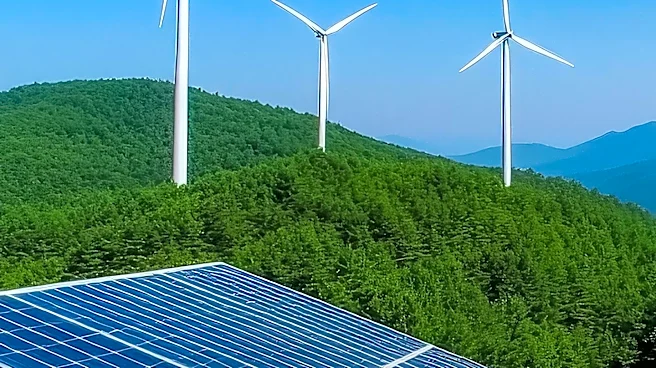
Congresswoman Celeste Maloy recently visited the DESRI Horseshoe Solar Project in Tooele County, Utah, highlighting the state's significant shift towards solar energy. In May, solar energy surpassed natural gas as Utah's top energy source, according to data
from Ember. The Horseshoe Solar Project, which generates 75 megawatts of power, is contracted with Rocky Mountain Power for Meta's data center in Eagle Mountain. Despite a political climate that has seen reduced tax incentives for solar and wind under the Trump administration, Maloy expressed her support for an 'all-of-the-above' energy policy, emphasizing the importance of including wind and solar in the energy mix.
Why It's Important?
The growth of solar energy in Utah represents a significant shift in the state's energy landscape, reflecting broader trends towards renewable energy sources. This transition is crucial for reducing carbon emissions and combating climate change. The support from political figures like Congresswoman Maloy can influence public policy and encourage further investment in renewable energy. However, the reduction of federal incentives for solar and wind projects poses challenges for the industry, potentially slowing down progress. The outcome of these policy decisions will impact energy costs, environmental sustainability, and economic growth in the region.
What's Next?
As Utah continues to develop its renewable energy infrastructure, stakeholders will likely monitor the impact of federal policy changes on the state's energy sector. The ongoing political debate over energy policy could influence future legislative actions and funding for renewable projects. Additionally, the upcoming elections may bring changes in leadership that could alter the trajectory of energy policy in Utah and beyond. The state's commitment to an 'all-of-the-above' energy approach will be tested as market demands and environmental concerns continue to evolve.