





What's Happening?
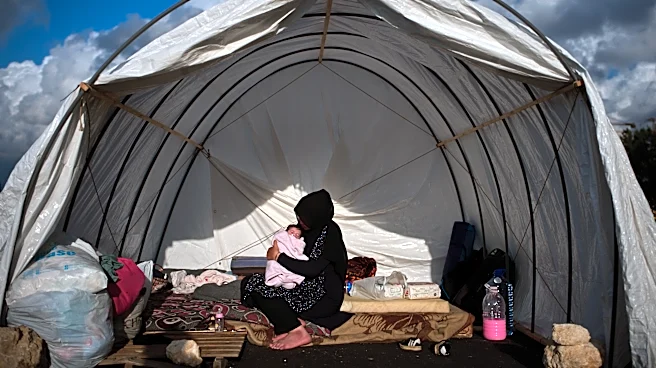
A newborn named Shiman was born in a tent on Beirut's waterfront after her family fled Israeli airstrikes that destroyed their home. Her mother, Haifa Kenjo, could not afford the hospital delivery fee after losing their savings in the airstrike, leading
to Shiman's birth in unsanitary conditions. The family, originally from Syria, is among over 1 million people displaced by the ongoing conflict between Israel and Hezbollah. The United Nations reports that 13,500 pregnant women are struggling to access adequate maternal care in Lebanon. Kenjo's family is living in a donated tent, facing challenges such as hunger and lack of resources, with Shiman's health compromised by the conditions.
Why It's Important?
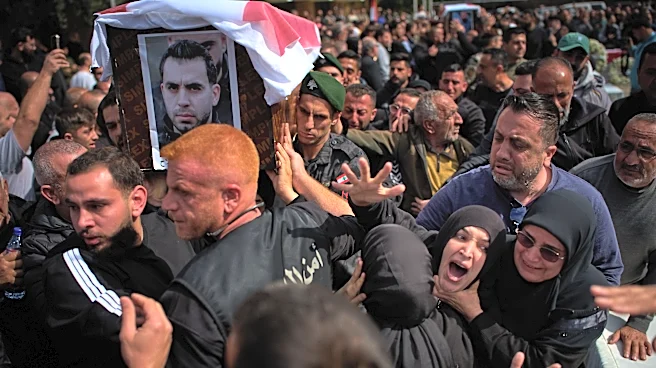
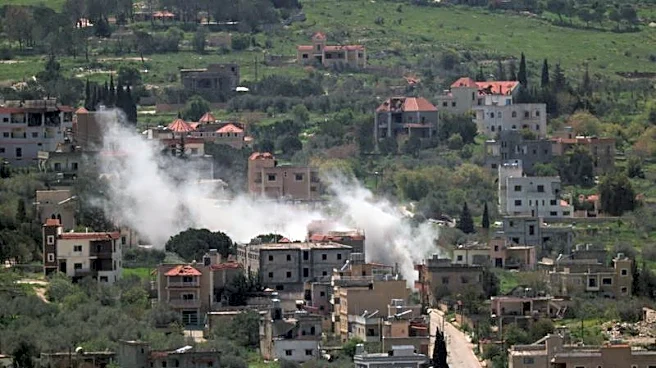
The displacement of over 1 million people in Lebanon due to the Israel-Hezbollah conflict highlights a significant humanitarian crisis. The lack of access to maternal care for thousands of pregnant women underscores the dire situation for vulnerable populations. This crisis affects not only the immediate health and safety of those displaced but also has broader implications for regional stability and international humanitarian efforts. Aid organizations are warning of worsening conditions, which could lead to increased international involvement and pressure on governments to address the conflict and its humanitarian impact.
What's Next?
The ongoing conflict between Israel and Hezbollah is likely to continue affecting civilians, with potential for further displacement and humanitarian needs. International aid groups may increase their efforts to provide support, while diplomatic efforts could be intensified to seek a resolution to the conflict. The Lebanese government and international community face challenges in addressing the immediate needs of displaced populations and ensuring access to healthcare and basic necessities.