






What's Happening?
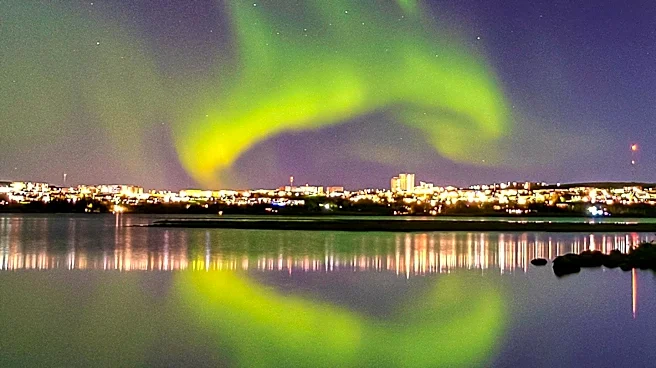
A minor geomagnetic storm, rated G1 by the Space Weather Prediction Center, is expected to make the northern lights visible across 19 U.S. states, including Vermont. The aurora borealis, typically seen in high-latitude regions, may be visible in states such
as Washington, Idaho, Montana, North Dakota, South Dakota, Minnesota, Wisconsin, Michigan, and Maine. The storm's intensity could also allow glimpses in Oregon, Wyoming, Nebraska, Iowa, Illinois, Indiana, Ohio, New York, Vermont, and New Hampshire. The best viewing times are between 10 p.m. and 2 a.m., with clear skies predicted to enhance visibility.
Why It's Important?
The visibility of the northern lights in the U.S. is a rare event, offering a unique opportunity for residents in the northern states to witness this natural phenomenon. This occurrence highlights the impact of solar activity on Earth's atmosphere, providing a visual spectacle that can increase public interest in space weather and its effects. The event also underscores the importance of monitoring geomagnetic storms, which can have broader implications for satellite operations and power grids.
What's Next?
As the geomagnetic storm progresses, further updates from the Space Weather Prediction Center will be crucial for those hoping to catch a glimpse of the aurora. Observers are advised to find locations away from city lights to maximize their chances of seeing the northern lights. The event may also prompt increased interest in space weather forecasting and its potential impacts on technology and infrastructure.