






What's Happening?
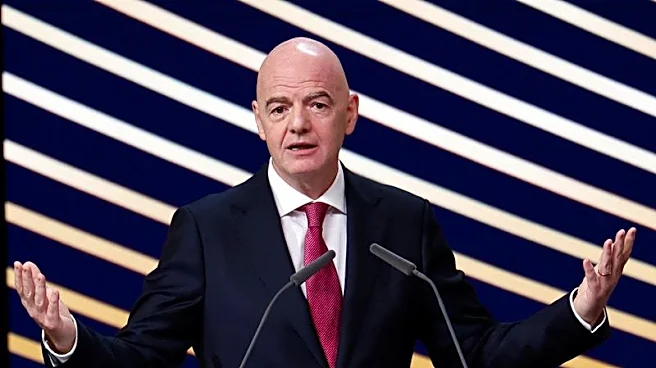
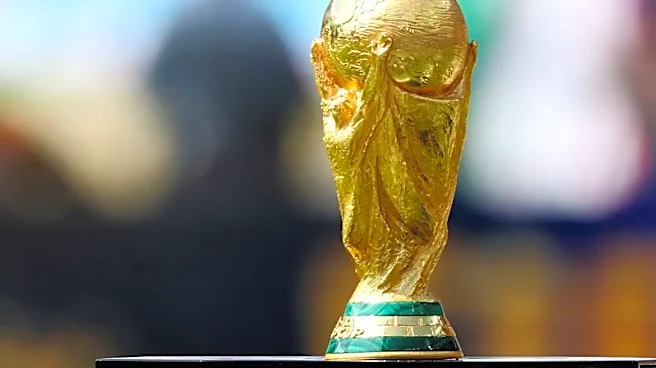
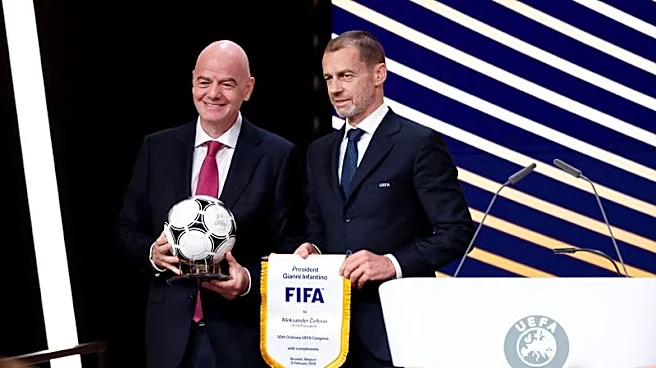
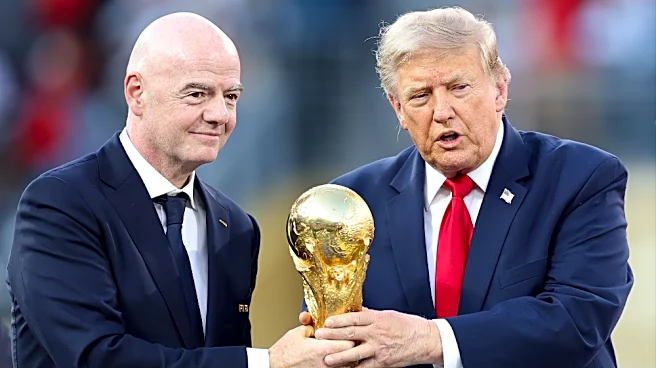
FIFA President Gianni Infantino has retracted a proposal to sell stakes in the World Cup to private investors following widespread opposition. The plan, which aimed to raise significant funds by selling commercial rights of the men's and women's World Cups
and the Club World Cup, faced strong resistance from UEFA and other football confederations. UEFA even threatened to boycott future FIFA tournaments if the proposal proceeded. The backlash also led to the resignation of Carlos Cordeiro, a senior advisor to Infantino, and criticism from FIFA's chief operating officer, Kevin Lamour. Infantino acknowledged that the proposal had created divisions and announced its withdrawal, emphasizing the organization's commitment to unity and improvement in football.
Why It's Important?
The decision to abandon the stake sale is significant as it highlights the power dynamics within international football governance. The backlash from UEFA and other confederations underscores the importance of consensus in global sports administration. The proposal's failure also raises questions about Infantino's leadership and his ability to navigate complex stakeholder interests. The incident could impact FIFA's financial strategies and its relationships with member associations, potentially influencing future governance and policy decisions. The episode reflects broader tensions in sports management, where commercial interests often clash with traditional governance structures.
What's Next?
Attention will now shift to Infantino's future as FIFA President, with his leadership under scrutiny following the internal revolt. UEFA and other confederations are reportedly seeking candidates to challenge Infantino in the upcoming FIFA election. The outcome of this leadership contest could shape FIFA's strategic direction and its approach to commercial partnerships. Additionally, FIFA may need to explore alternative funding mechanisms to support its initiatives, given the rejection of the stake sale proposal. The organization's ability to maintain unity among its member associations will be crucial in navigating these challenges.