


What's Happening?
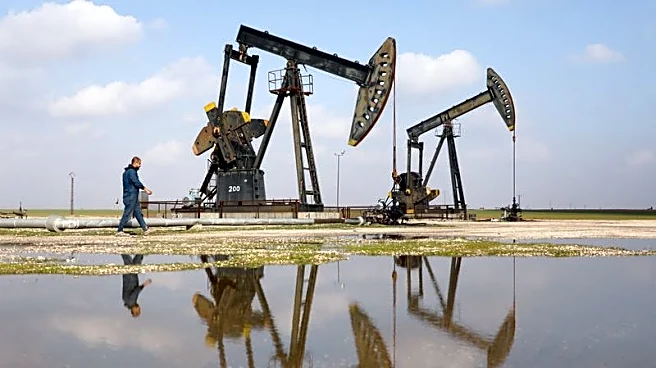
Pakistan has been moving towards greater deregulation of its petroleum sector, aiming to improve market efficiency and attract investment. However, the country remains heavily dependent on imported petroleum, making it vulnerable to global oil market fluctuations.
The COVID-19 pandemic and geopolitical conflicts, such as the Russia-Ukraine war, have caused significant volatility in oil prices, impacting Pakistan's economy. The government has adopted market-based pricing mechanisms and reduced fuel subsidies to improve fiscal discipline, but this exposes consumers to international price swings. The Oil and Gas Regulatory Authority (OGRA) now calculates ex-refinery prices based on global oil prices, exchange rates, and taxes, with the federal government announcing retail prices after adjustments.
Why It's Important?
The deregulation of the petroleum sector is crucial for Pakistan's long-term energy security and economic stability. Market-based pricing can attract investment in refineries and fuel distribution networks, reducing dependence on imports. However, the exposure to global price fluctuations poses risks to consumers and industries, potentially leading to inflation and increased production costs. The government's reliance on the Petroleum Levy for revenue further complicates affordability for households and businesses. The situation underscores the need for strategic petroleum reserves and energy diversification to enhance resilience against external shocks.
What's Next?
Pakistan must focus on modernizing its refining industry to produce cleaner fuels and reduce import dependency. Strategic petroleum reserves should be developed to mitigate supply disruptions. Additionally, accelerating energy diversification through investments in hydropower, solar, wind, and natural gas resources is essential. These measures can strengthen Pakistan's energy infrastructure and reduce vulnerability to global market volatility. The government may also need to balance fiscal consolidation with consumer protection to ensure affordable energy access.
Beyond the Headlines
The shift towards deregulation reflects broader economic reforms in Pakistan, supported by international financial institutions like the IMF. While these reforms aim to improve fiscal discipline and market efficiency, they also highlight the challenges of balancing economic liberalization with social welfare. The impact of global geopolitical developments on oil prices and exchange rates further complicates the policy landscape. As Pakistan navigates these challenges, the role of government intervention in ensuring energy security and economic stability remains a critical consideration.