







What's Happening?
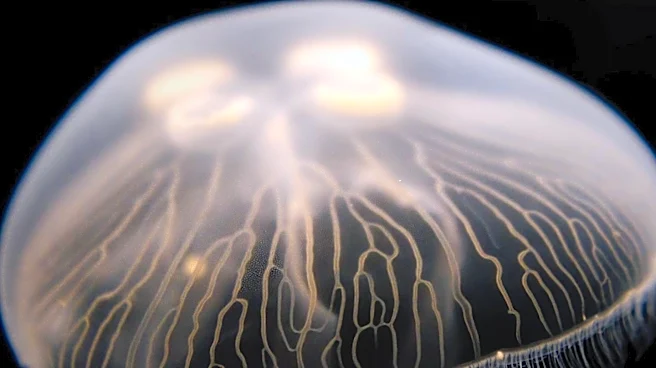
The jellyfish species Turritopsis dohrnii, often referred to as the 'immortal jellyfish,' has the unique ability to revert to its juvenile form after reaching maturity, effectively resetting its life cycle. This process, known as cellular transdifferentiation,
allows the jellyfish to transform back into a polyp stage when faced with adverse conditions, such as injury or environmental stress. This remarkable biological phenomenon has been studied by marine biologists, including Maria Pia Miglietta from A&M University in Texas, who highlights the jellyfish's ability to avoid death by continuously rejuvenating itself.
Why It's Important?
The study of Turritopsis dohrnii offers significant insights into the mechanisms of cellular regeneration and longevity, which could have profound implications for medical research, particularly in the fields of aging and regenerative medicine. Understanding how this jellyfish achieves biological immortality could lead to breakthroughs in human health, potentially informing treatments for age-related diseases and extending human lifespan. The jellyfish's ability to avoid death challenges existing biological paradigms and inspires further research into the potential for similar regenerative processes in other organisms.