



What's Happening?
The foreign ministers of Australia, Canada, Italy, and the United Kingdom have issued a joint statement describing the humanitarian situation in Gaza as "dire" and calling on Israel to "stop the delays now" in allowing aid to enter. Their appeal comes
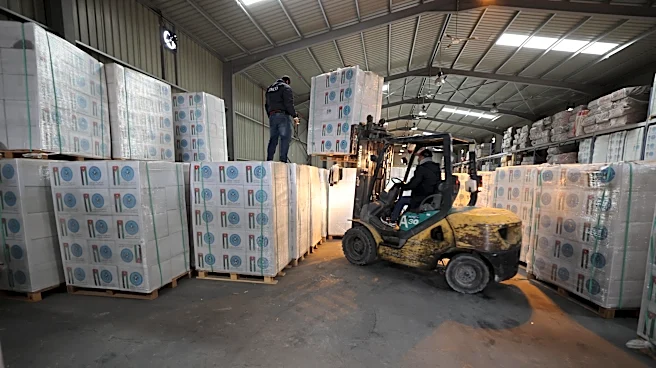
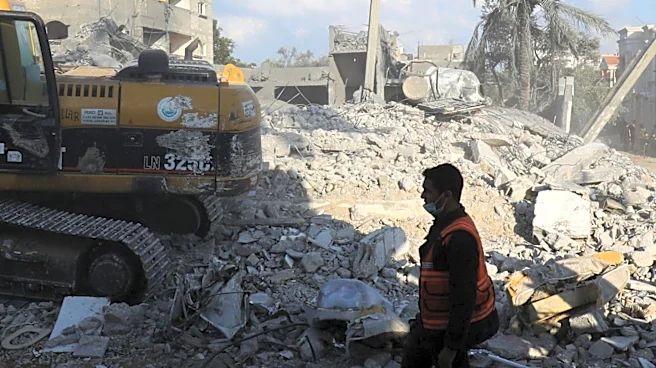
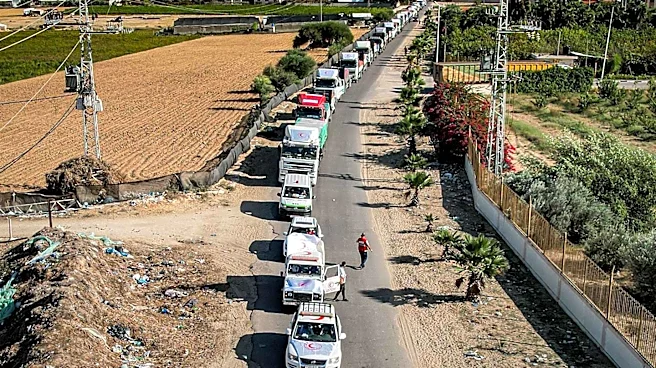
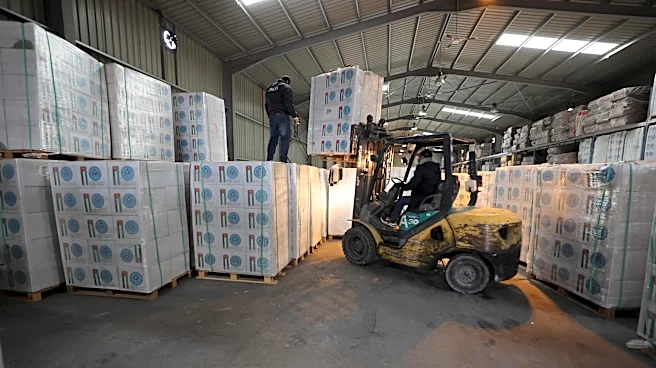
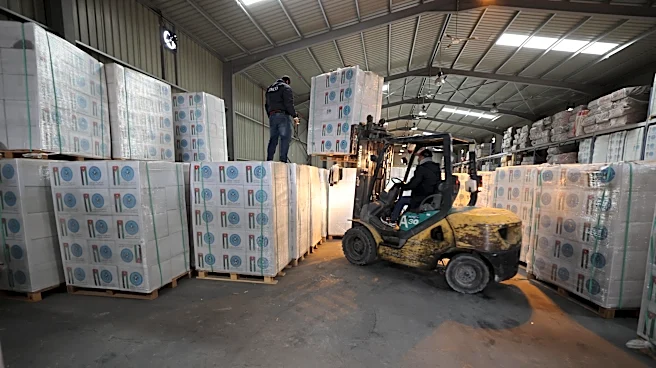
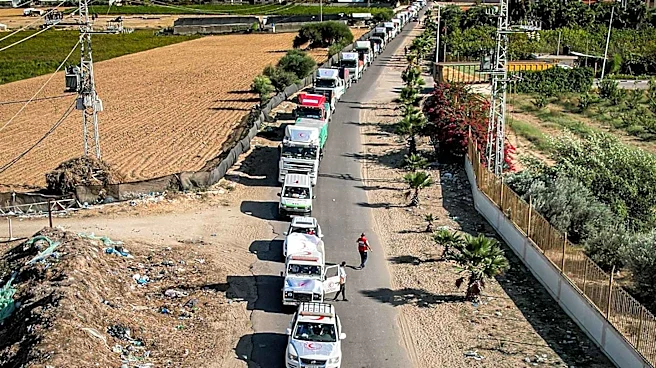
as heavy rain and the first winter storm have caused widespread flooding, collapsed damaged buildings, and disrupted essential services, exacerbating the suffering of civilians. The ministers highlighted that 150,000 tents and other vital supplies are currently being held at the border, prevented from entering Gaza. They urged for "immediate, rapid and unimpeded humanitarian access throughout Gaza," and called on Israel to open border crossings and permit the entry of "dual-use items" necessary for humanitarian operations and early recovery. The statement also called on all parties to respect the cease-fire, uphold international humanitarian law, and implement the Comprehensive Plan for Gaza to ensure assistance reaches vulnerable populations.
Why It's Important?
This joint statement from four significant international players underscores the escalating global concern over the humanitarian crisis in Gaza. The collective call for immediate and unimpeded aid access puts increased diplomatic pressure on Israel, highlighting the international community's view that the current restrictions are unacceptable. The emphasis on "dual-use items" reflects a critical point of contention, as these supplies are often essential for humanitarian operations but are frequently delayed due to security concerns. The worsening winter conditions amplify the urgency, as the lack of shelter and basic necessities could lead to a further increase in casualties and suffering. This situation could impact Israel's international standing and its relationships with these allied nations, potentially leading to further diplomatic actions or sanctions if the aid situation does not improve. The call for adherence to international humanitarian law also reinforces the legal and ethical obligations of all parties involved in the conflict.
What's Next?
Following this joint appeal, increased diplomatic pressure on Israel from these four nations and potentially other international actors is anticipated. The foreign ministers' statement suggests a coordinated effort to push for policy changes regarding aid entry into Gaza. Humanitarian organizations will likely continue to advocate for the release of the 150,000 tents and other vital supplies currently held at the border. The onset of winter will maintain a high level of urgency for these demands, as the humanitarian situation is expected to deteriorate further. International bodies, such as the UN Office for the Coordination of Humanitarian Affairs, will continue to monitor and report on the conditions, providing data that could inform future diplomatic and humanitarian interventions. The effectiveness of this joint call will depend on Israel's response and its willingness to facilitate greater aid access.
Beyond the Headlines
The call for aid access in Gaza by Australia, Canada, Italy, and the UK highlights a broader international debate on the balance between national security and humanitarian imperatives during armed conflicts. The specific mention of "dual-use items" points to a complex challenge where materials with potential military applications are also crucial for civilian survival and recovery. This situation raises ethical questions about the responsibility of states to protect civilian populations, even in conflict zones. The long-term implications of denying essential aid, particularly during harsh weather conditions, include not only immediate loss of life but also the potential for widespread disease, displacement, and a protracted humanitarian catastrophe. The international community's ability to effectively address such crises will shape future norms of engagement in conflict and the enforcement of international humanitarian law.