



What's Happening?
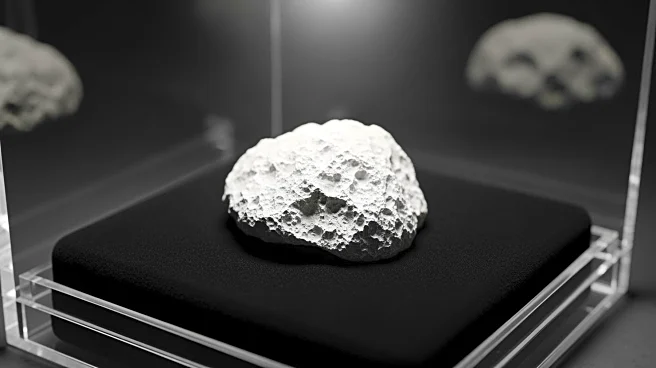
NASA maintains stringent control over lunar samples collected during the Apollo missions, which took place between 1969 and 1972. These samples, totaling 842 pounds of moon rocks, core samples, pebbles, sand, and dust, are stored at the Lunar Sample Laboratory
Facility at the Johnson Space Center in Houston, Texas. The facility ensures a non-contaminating environment for these valuable astromaterials. Despite the high value and scientific significance of these samples, it is illegal to own, buy, or sell them. The U.S. government considers them federal property, and any attempt to trade them is a serious federal crime. In 2002, a notable case involved three NASA interns who stole 17 pounds of moon rocks, valued at nearly $21 million, from the Johnson Space Center. They were apprehended by the FBI while attempting to sell the rocks, resulting in prison sentences and house arrest for the perpetrators.
Why It's Important?
The strict regulations surrounding Apollo moon rocks underscore the importance of preserving scientific and cultural heritage. These samples are not only valuable for ongoing scientific research but also hold historical significance as artifacts from humanity's first missions to the moon. By enforcing these laws, NASA ensures that the samples remain available for scientific study, which can lead to new discoveries about the moon and the broader solar system. The legal framework also deters black market activities, protecting the integrity of scientific research and preventing the loss of irreplaceable government property. This approach supports NASA's mission to advance space exploration while safeguarding national interests.
What's Next?
NASA continues to allow public access to lunar samples through a controlled loan program for educators and researchers. To participate, individuals must complete a certification workshop at the Johnson Space Center, which includes training on handling and security protocols. This program ensures that the samples are used for educational and research purposes while maintaining strict oversight. As NASA progresses with its Artemis program, which aims to return humans to the moon, the agency's policies on lunar samples will likely remain stringent to prevent unauthorized distribution and ensure the samples' availability for future scientific endeavors.
Beyond the Headlines
The legal and ethical considerations surrounding the ownership and trade of lunar samples highlight broader issues of space governance and the management of extraterrestrial resources. As space exploration advances, questions about the ownership and use of space resources will become increasingly relevant. NASA's approach to lunar samples sets a precedent for how space-faring nations might handle similar issues in the future, balancing scientific advancement with legal and ethical responsibilities.