





What's Happening?
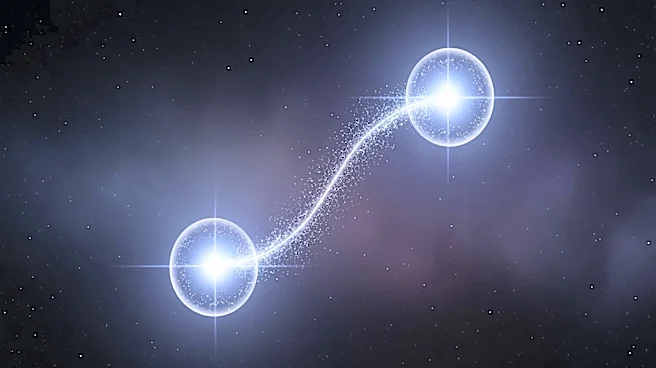
A study published in The Astrophysical Journal reveals that sympathetic flares, previously thought to be unique to our Sun, occur on over 16,000 stars. These flares are secondary outbursts triggered by a primary flare, creating a ripple effect. Researchers
from Tufts University discovered this phenomenon across various types of stars, including Sun-like giants and M dwarfs. The study utilized a novel algorithm, TOFFEE, to analyze over 200,000 flares, identifying the sympathetic flares' occurrence. This finding suggests a universal mechanism behind these flares, challenging previous assumptions about stellar behavior.
Why It's Important?
The discovery of sympathetic flares on a wide range of stars expands our understanding of stellar dynamics and the mechanisms driving solar activity. This could have significant implications for astrophysics, particularly in understanding the magnetic fields and energy processes of stars. The findings may also influence how scientists predict and study solar flares, which can impact space weather and satellite operations. The research highlights the potential for new insights into the fundamental processes governing star behavior across the galaxy.
Beyond the Headlines
The study's findings suggest that the mechanism behind sympathetic flares is a universal feature of stars, regardless of their size or type. This challenges existing models of stellar activity and could lead to a reevaluation of how stars are classified and studied. The research also underscores the importance of advanced algorithms in detecting and analyzing complex astronomical phenomena, paving the way for future discoveries in the field.